
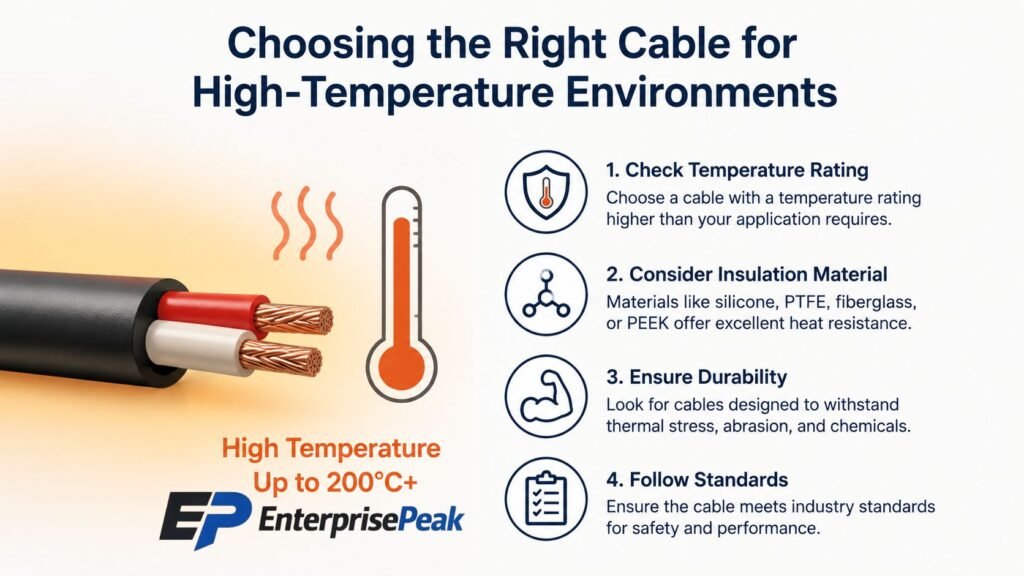

Across such industries as manufacturing, food processing, automotive, aerospace, and renewable energy, operations frequently take place in environments that would cause standard cables to quickly degrade.
Excessive heat may be just one of the many challenges that a given cable might need to stand up to; nonetheless, it is a very considerable one. In the absence of suitably heat-resistant cables, high temperatures can cause insulation to melt, crack, or become brittle. This, in turn, can lead to electrical failures, downtime, fire hazards, and a need for expensive repairs.
However, all this still leaves the question of which specific heat-resistant cables to pick for your own electrical system or project. This article, then, will outline the major things you will need to consider in making your choice.
A Quick Introduction to Heat-Resistant Cables
Heat-resistant cables are electrical cables that are specially designed to operate safely in environments where temperatures exceed the limits of standard PVC-insulated cables.
Such ordinary cables are typically able to handle up to 70°C or 90°C conductor temperature. However, in certain settings, cables may be required that can maintain electrical and mechanical performance in 150°C, 200°C, 250°C, or even higher temperatures.
Thanks to their manufacture using specialised insulation and sheath materials, the best heat-resistant cables are able to rise to this test.
Popular heat-resistant cable types include:
- Silicone rubber cables
- Polytetrafluoroethylene (PTFE) cables
- Fibreglass braided cables
- Mica and ceramic insulated cables
- Ethylene propylene rubber (EPR) variants
These cables’ ability to remain stable and reliable under prolonged exposure to high temperatures makes them ideal for such applications as:
- Industrial ovens and furnaces
- Engine compartments and exhaust systems in the automotive and marine sectors
- Foundries, steelworks, and glass manufacturing
- Food and beverage processing lines
- Solar photovoltaic (PV) installations and wind turbines exposed to direct sunlight or heat.
5 Factors to Consider When Deciding Between Heat-Resistant Cables
A range of variables will need to be accounted for as you whittle down your options, with the aims of ensuring the right performance, longevity, and compliance:
- Temperature Rating
The maximum operating temperature will be the first factor to consider as you compare heat-resistant cables, as well as the most important one.
Make sure you always assess such aspects as the continuous operating temperature, short-term peak temperatures, ambient environmental conditions, and proximity to heat sources, as these may all have an impact on the cable you ultimately choose.
- Insulation Material
Insulation materials vary in the levels of heat resistance that they provide.
Silicone-insulated cables, for example, are flexible and typically capable of withstanding temperatures as high as 180°C. This helps make them an in-demand option for industrial machinery, lighting systems, and heating equipment.
Meanwhile, PTFE cables can often tolerate temperatures exceeding 250°C. They commonly see use across the aerospace sector, laboratories, and some of the most punishing industrial environments.
- Environmental Conditions
Escalating temperatures are far from the only challenge at industrial premises.
So, your decision on which heat-resistant cable to use may also hinge on the extent to which it is likely to be exposed to moisture, oil, chemicals, ultraviolet (UV) radiation, mechanical stress, vibration, and/or abrasion.
- Flexibility and Installation Requirements
For some high-temperature applications, there may be a need for cables to bend or move frequently. In these situations, the flexibility of silicone heat-resistant cables often makes them the favoured choice.
When it comes to fixed installations, on the other hand, more rigid cable types might be a better bet due to the enhanced durability and protection they can provide.
Such factors as cable routing, confined spaces, and installation methods may also influence the cable selection process.
- Fire Performance and Safety Standards
Fire safety might be a vital consideration for the application for which you are sourcing heat-resistant cables. If so, you may need to look for cables that are specifically designed to maintain circuit integrity in the event of a fire.
There are various national and international standards that could be relevant to this aspect of your search, such as BS EN 50200, BS 6387, and the Construction Products Regulation (CPR) in the UK and the European Union (EU).
Conclusion: High-Temperature Environments Demand Well-Chosen Cables
Careful consideration of all the aforementioned factors will greatly support your efforts to select cables that can be depended on to deliver excellent performance, even under extreme conditions.
Remember: if you’re overseeing an electrical system in a demanding thermal environment, selecting the right cable solutions for the job won’t be a merely “technical” decision. It will be a critical aspect of ensuring safe and uninterrupted operations at your site.