
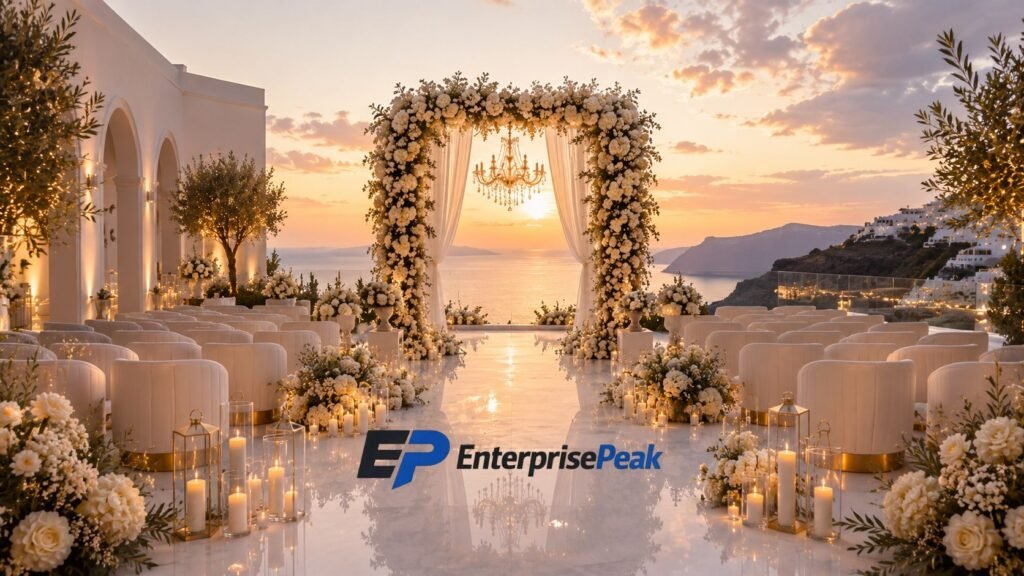

Luxury weddings have never looked less like what they used to be. The chandeliers are still there – but the logic behind them has changed entirely.
A decade ago, a luxury wedding meant a specific visual checklist: a grand ballroom, a towering cake, a guest list in the hundreds, flowers so abundant they obscured the architecture. In 2026, that formula feels outdated to the couples actually planning at this level. What replaced it is something harder to photograph but easier to feel – a wedding that is unmistakably, specifically them.
Wezoree works with premium wedding vendors across North America, Europe, and beyond. What we observe across our editorial network, vendor profiles, and real wedding stories points to a consistent shift: modern luxury is no longer about visible expense. It’s about deliberate, layered experiences that reflect a couple’s identity at the highest level of craft.
This article maps exactly what that means in 2026 – the trends, the decisions, the vendor dynamics, and the practical details couples and professionals need to understand.
Redefining Luxury: From Opulence to Meaningful Experiences
The clearest way to understand the shift is this: luxury used to signal status to guests. Now it signals intention to the couple themselves. Modern luxury couples are typically well-traveled, design-literate, and deeply aware of what generic looks like. They’ve attended weddings and seen the templates. What they want is the opposite – a celebration that could not have belonged to anyone else.
This has several concrete implications:
- Scale is no longer the main priority. An intimate dinner for 40 in a restored Provençal farmhouse feels more luxurious than a 300-person ballroom with generic décor.
- One great vendor beats five average ones. A florist whose aesthetic truly clicks with the couple’s vision will always outperform a lineup of competent-but-forgettable options.
- The new benchmark is emotional resonance. Couples aren’t asking “will guests be impressed?” anymore – they’re asking “will this feel like us?”
Personalization as the Core of Modern Wedding Design
Personalization in 2026 goes far beyond monogrammed napkins or a custom cocktail named after the couple’s dog. It operates at the level of concept, narrative, and sensory design. What deep personalization looks like in practice:
| Element | Surface-level (outdated) | Deep personalization (2026) |
| Stationery | Custom fonts and colors | Typography rooted in a specific cultural reference or visual archive |
| Florals | “Romantic, lush, neutral palette” | Botanicals sourced from the region where they met; arrangements echoing a specific art movement |
| Music | DJ with curated playlist | Live ensemble playing arrangements commissioned specifically for the event |
| Menu | Farm-to-table tasting menu | Dishes that reconstruct meaningful meals from the couple’s relationship history |
| Venue styling | Cohesive color palette | A full art direction brief: mood, texture, light temperature, scent, sound |
The couples behind this shift aren’t picking options off a menu. They’re working with vendors who are true creative partners – people who can take a vision and bring it to life with real technical skill. That’s why choosing vendors at this level is less about impressive credentials and more about fit. A photographer with a moody, editorial style isn’t the same as one who shoots bright and airy – even if both are technically brilliant.
Experience-Driven Celebrations: What Couples Now Prioritize
When Wezoree editorial contributors speak with top-tier planners, a consistent set of priorities emerges for 2026 couples planning at the luxury level. Here are the top priorities reported by luxury wedding planners:
- Guest journey design – How guests move through the day, what they encounter along the way, and how the energy shifts from ceremony to reception is choreographed with the care of a theater production.
- Sensory layering – Scent, sound, texture, and temperature are treated as design elements, not afterthoughts. Custom fragrances, acoustic engineering, and tactile details like linen weight, tableware, and floral texture are increasingly standard requests.
- Meaningful rituals – Couples are rewriting ceremony structures, weaving in cultural elements from multiple heritages or building entirely new traditions that reflect their own story.
- Vendor relationships over transactions – The couples who end up happiest with their day chose vendors they personally connected with, not just the most-reviewed names in a category.
- Documentation quality – Photography and videography have moved up the priority list because couples understand these are the things that last. Spending in this category has risen significantly.
- Sustainable and considered choices – Not as a trend to perform, but as a real value. Local sourcing, sculptural installations in place of heavy florals, and low-waste catering are being requested without any prompting.
The Role of Top-Tier Vendors: Insights from Wezoree’s Global Network
The vendors who consistently deliver at the modern luxury level share a profile that has less to do with awards and more to do with approach.
Wezoree’s editorial network spans photographers, planners, florists, venues, videographers, and other specialists across the US, Europe, and growing markets in the Middle East and Latin America. Across these conversations, several characteristics separate the vendors who define this space from those who operate within it. What distinguishes the top tier:
- They ask better questions. The first conversation is less about services and pricing and more about understanding the couple’s references, aesthetic sensibilities, and what they actually want the day to feel like.
- They have a clear point of view. The best vendors don’t bend to every brief. They bring a distinct perspective and help couples sharpen their vision rather than just execute instructions.
- They think in terms of the whole event, not their deliverable alone. A great photographer notices that the light at 6 pm in a particular venue will affect their shots and brings it up at the planning stage, not on the day.
- They manage the emotional arc as well as the logistics. Luxury clients aren’t just paying for technical skill. They’re trusting vendors to keep the experience on track when the unexpected happens.
- They invest in their own credibility infrastructure. A strong portfolio, published real weddings, editorial features, and client testimonials aren’t vanity. They’re how the right couples find the right vendors.
This last point is central to how Wezoree thinks about vendor presence. Trust is established long before a couple ever reaches out. The vendors who understand this invest in building brand authority over time, not just chasing immediate visibility.
Design Trends Shaping Modern Luxury Weddings in 2026
The aesthetic direction of luxury weddings in 2026 reflects broader shifts in design culture, moving away from maximalist excess toward something more considered and quietly beautiful. Key aesthetic directions this year:
| Trend | Description |
| Tonal restraint | Monochromatic or near-monochromatic palettes executed with textural variation – linen against velvet against stone |
| Architectural florals | Structural installations replacing volume-driven arrangements; negative space used deliberately |
| Warm candlelight dominance | Artificial lighting engineered to mimic candlelight; hard event lighting is considered a failure of ambiance |
| Organic material emphasis | Raw stone, aged wood, unfinished terracotta, dried botanicals – materials with history and imperfection |
| Editorial fashion influence | Wezoree’s contributing photographers are capturing a clear shift in bridal fashion – the runway is now setting the tone more than tradition. |
| Intimate scale luxury | Micro-weddings (20–60 guests) at venues previously reserved for large events; the exclusivity of the venue matched to the intimacy of the gathering |
| Narrative stationery suites | Multi-piece paper goods that tell a story across the wedding weekend, not just the day |
What these directions share is a preference for depth over surface. The real luxury is in what you notice when you look closely, not in what hits you the moment you walk in.
Destination Weddings and Exclusive Venues: Data from Wezoree
The luxury destination wedding market has shifted, and not just geographically. The most sought-after locations in 2026 aren’t always the most famous ones. Leading destination categories on Wezoree:
- Southern Europe – Italy (Amalfi, Tuscany, Puglia, Sicily), Greece (Santorini, Athens, Peloponnese), Portugal (Alentejo, Douro Valley, Lisbon) – remains dominant. However, within these regions, couples are moving away from iconic postcards toward lesser-known properties.
- France – Provence and the Loire Valley command strong interest, particularly among North American couples seeking the combination of culinary culture and architectural heritage.
- Emerging luxury destinations – The Azores, Montenegro, Sardinia, and parts of Morocco are appearing with increasing frequency in Wezoree’s real wedding content.
- USA domestic luxury – Ranch and estate weddings in Montana, Colorado, and the Hudson Valley are the dominant domestic luxury category; couples seeking natural grandeur without international travel.
Venue characteristics that define modern luxury:
| Characteristic | Why it matters |
| Architectural distinctiveness | The venue makes a visual statement on its own – it’s not just a blank canvas |
| Exclusivity of access | Full buyout available, no other events happening on the same day |
| Culinary infrastructure | On-site kitchen or strong ties to regional producers and caterers |
| Natural integration | Seamless indoor/outdoor flow where the landscape feels like part of the design |
| Vendor flexibility | The venue works with your chosen team rather than locking you into a preferred-vendor list |
The most competitive luxury venues in Europe now book 18–24 months out for peak season dates. This has pushed serious couples to begin venue searches significantly earlier than prior generations did.
Technology & Innovation in Luxury Wedding Planning
Technology in luxury weddings is invisible when it works correctly. The goal is never to make the event feel technological – it’s to use technology to remove friction, enhance experience, and deliver precision.
How technology is being integrated in 2026:
- AI-assisted planning tools – Planners are using AI for logistics modeling, vendor coordination, and budget planning. Couples rarely see this layer directly; they experience it as everything running smoothly.
- Immersive venue previews – 3D walkthroughs and virtual staging are now standard for destination couples who can’t visit the venue before booking.
- Custom event apps – Not a gimmick, but a practical guest experience tool: schedules, transport logistics, local recommendations, and communication all in one place.
- Advanced lighting design – Programmable lighting systems that shift color temperature throughout the day are now accessible at the higher end of the event market.
- Film and hybrid photography – The return of medium-format film, often paired with digital capture, reflects a desire for images that feel substantial and timeless. Many of Wezoree’s most-followed photographers shoot in hybrid formats.
- AI in floristry and design – Floral and event designers are using generative tools for concept development and client presentations. Not to replace creativity, but to speed up the visualization process.
Technology at this level handles the complexity so that human judgment, taste, and relationships can do what they do best. The best planners aren’t great because of the tools they use – they’re more responsive, more precise, and more creative with them.
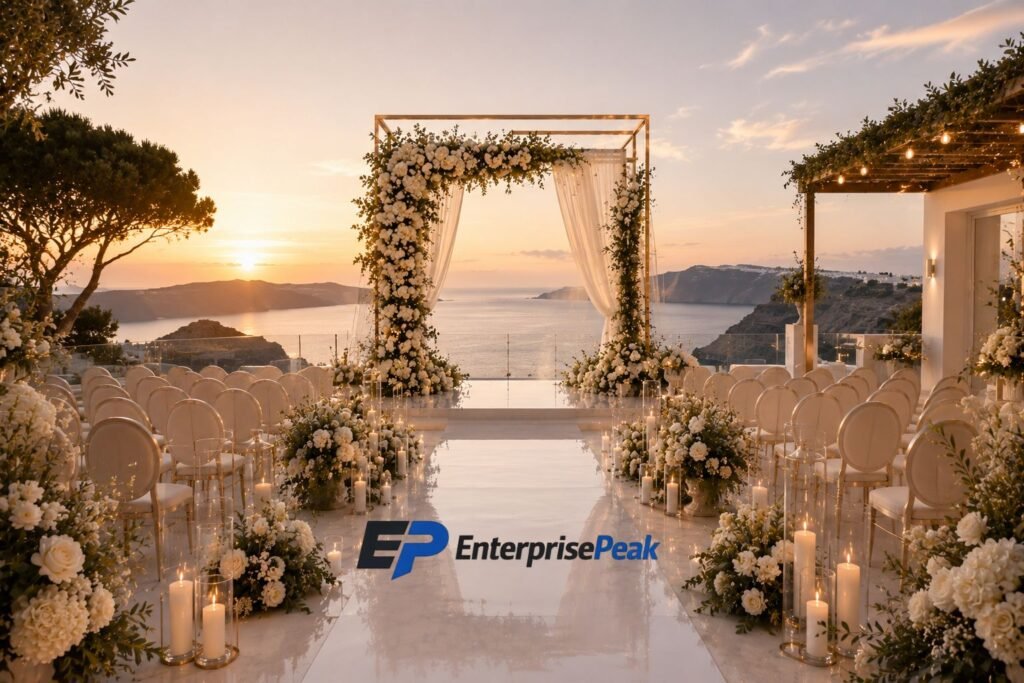
How Wezoree Curates the World’s Best Wedding Professionals
Wezoree is not a directory. That distinction matters in practice, not just in principle. A directory lists everyone who applies. Wezoree’s approach is editorial – built around vendor profiles that work as brand homes, real weddings that work as proof, and inspiration content that makes a continuous case for why certain professionals belong at the top of this industry. Here’s what that ecosystem looks like in practice:
- Vendor profiles built around portfolio, positioning, reviews, awards, and interview content – not just contact details
- Real Weddings that connect vendors, destinations, and visual stories, so couples can move from a venue they love to the planner who worked there to the photographer whose work caught their eye
- Editorial interviews that reveal a vendor’s approach, philosophy, and personality – the things couples actually weigh when making a final decision
- Destination hubs that organize vendors, venues, and inspiration by location, which is essential for destination wedding research
- Awards and recognition that give vendors credible third-party validation they can point to and share
Practical Tips: How to Achieve a Modern Luxury Wedding Aesthetic
For couples planning at this level, these principles consistently separate weddings that feel truly luxurious from those that simply spent a luxury budget.
- Start with concept, not vendors. Define the emotional core of the day before making any bookings. What should guests feel when walking away? What’s the one thing that should be unmistakably you? That concept becomes the filter for every decision that follows.
- Prioritize alignment over credentials. The most awarded vendor in a category isn’t automatically the right one for your wedding. Go through portfolios with one question in mind: does this person’s existing work look like what we want ours to look like?
- Invest asymmetrically. Identify the two or three elements that will define the experience – usually venue, photography, and one high-impact design choice – and put the budget there first. Luxury isn’t about everything being expensive; it’s about the right things being exceptional.
- Think in terms of the full weekend. A rehearsal dinner, wedding day, and morning-after brunch create far more opportunity for meaningful design than a single event. Brief your vendors on all of it.
- Choose vendors who communicate like collaborators. Early interactions reveal a lot. Vendors who ask sharp questions, push back thoughtfully, and bring ideas unprompted will consistently deliver better outcomes than those who wait to be told what to do.
- Use editorial content as research. Real wedding features, vendor interviews, and destination guides – including those on Wezoree – give you a far more accurate picture of how a vendor actually works than aggregated review scores ever will.
Conclusion
The future of luxury weddings belongs to the couples and vendors who understand that meaning is the new currency. Couples planning at the top of this market in 2026 aren’t looking for a service provider to deliver a product. They’re looking for collaborators who bring craft, perspective, and professional depth to execute something that has never existed before and will never exist again.
Wezoree is built around exactly this dynamic, serving wedding professionals who invest in brand over volume, in editorial credibility over algorithm dependency, and in long-term positioning over short-term lead generation. It’s where couples doing serious research find professionals doing serious work, and where those professionals build the international visibility their craft deserves.
That trust is established long before the first inquiry, and the vendors and couples who understand this are the ones defining what luxury means, not just in 2026, but for years beyond it.