
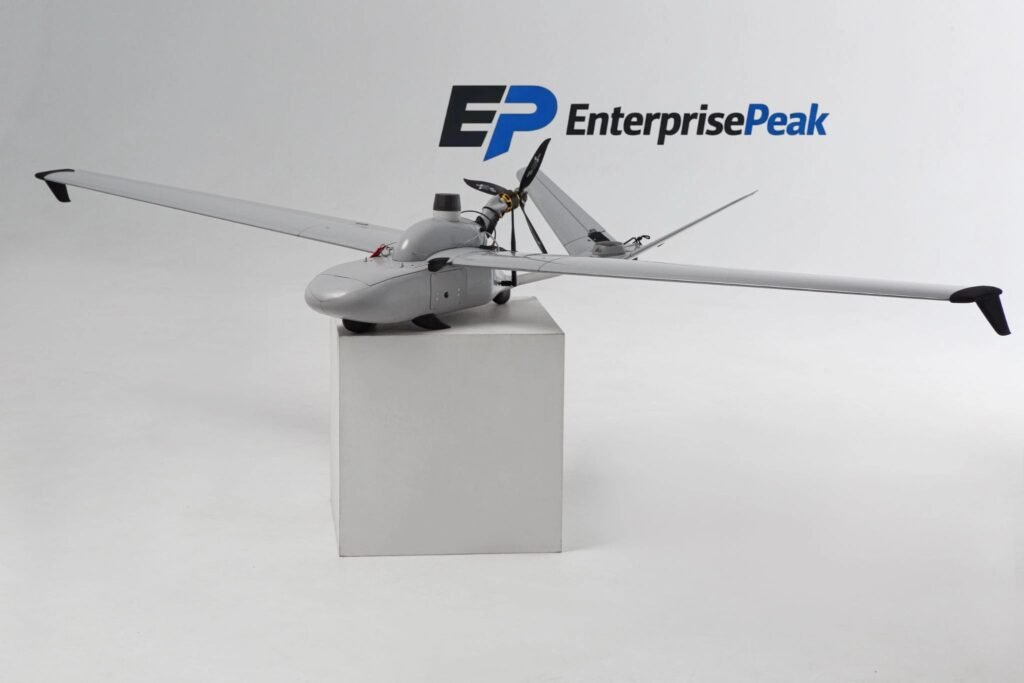

Drone technology has become a practical tool for industries that need better situational awareness and safer operations. These days, UAVs support mapping, infrastructure monitoring, inspection, reconnaissance, emergency response and security tasks. From compact aerial drones to extended-range aircraft, modern platforms help collect data in environments where human presence is risky or impossible. This makes UAV technology valuable for both civil and military applications.
What Are Unmanned Air Vehicles? Definition and Basics
UAV drones are aircraft that operate without a pilot on board, usually controlled remotely and following a pre-planned route. A complete UAV system typically includes the aircraft, ground control station, communication link, navigation module, payload and mission planning software. In practice, unmanned air vehicles are deployed to capture aerial data, monitor borders or areas, inspect infrastructure, support surveying and improve operational decision-making.
Professional platforms such as Cetus Photo highlight how unmanned aerial platforms have evolved from simple flying devices into advanced systems for demanding environments. They stand out for their extended endurance and long-range flight capabilities, high-quality camera, and anti-jamming GNSS, which enable them to excel in the most complex missions.
Types of Unmanned Air Vehicles: From Small Drones to Large Systems
UAVs differ by design, size, endurance and mission role:
- Multi-rotor drones are easy to deploy, compact and relevant for short-range operations.
- Fixed-wing UAVs are designed for greater area coverage and longer flight times, supporting more demanding missions.
- Hybrid systems combine VTOL with efficient flight capabilities, making them suitable for operations where launch space is limited but flight range is still important.
- Larger platforms, including UAV military systems, are commonly used for ISR and complex operational tasks.
How UAVs Work: Key Components and Autopilot Technology
Every drone consists of several core elements – the airframe, propulsion system, power source, onboard sensors, payload, communication equipment and control software. Together, they allow the aircraft to fly, navigate, collect aerial data and transmit information to the ground station.
Autopilot technology is one of the most essential components of modern UAV drones. It stabilises the platform, follows routes, controls altitudes and supports accurate mission execution. Advanced systems may also incorporate inertial navigation, GNSS and sensors to maintain reliable flight performance.
Challenges and Future Trends in UAV Technology
Even though UAV technology is dependable and suitable for a wide range of tasks, it still faces challenges. Weather conditions, communication range, battery life, data security and regulations may all affect performance. To deliver consistent data quality, UAVs must operate in difficult conditions and maintain stable communications. Therefore, future developments will focus on greater autonomy, improved sensors, more efficient energy systems, more robust navigation, and AI-driven technologies.
Conclusion: Why UAVs Are Transforming Industries
Aerial drones are increasingly reshaping industries, mainly by making aerial operations safer, faster, and more cost-efficient, and by helping organisations improve decision-making with accurate data. As UAV technology continues to evolve, its role will move beyond flight itself. The real advantage will come from integrated platforms that combine durable aircraft, software, and analytics into a single, efficient workflow.