


Basically, the perfect five-a-side kit for London boils to only three factors: shoes that match the type of your playing surface, light and breathable sportswear that can keep up with intense indoor and outdoor tempo, and equipment that would withstand the trauma of being tossed in a bag twice a week. Most players in London mess up with boots first, as they opt for studded football boots while the pitch actually demands astro turf trainers or flat-soled court shoes.
Why surface? Because London five a side matches are played in such a wide variety of locations. The most modern 3G astro caged pitches, for instance, can be found in Shoreditch and Clapham, whereas the old sand-filled astroturf surfaces are located in council leisure centres. Also, there are fully indoor sports halls with sprung or rubberised floors. Obviously, one of the shoes that has been working well on one of those surfaces will be the culprit for your downfall on another, so the first thing is never to ask “what boots are best” but rather “where am I playing this week”.
What footwear actually works on London five a side pitches
Some venues like Powerleague and Goals most often use modern 3G rubber-crumb pitches, also known as astro turf. To get a steady base there, trainers with a lot of small moulded rubber dimples are the best choice. Because these shoes do not just dig in but rather spread the grip along the sole, they suit this type of pitch really well. Besides, there is also the issue of turning comes into playing astro pitches a lot and the pilot will want to roll his/her foot to the maximum of the limited space. But, bladed and studded boots, with their longer piles, may easily catch leading to twisted ankles, and many venues, for preservation, ban them.
Indoor halls are more of a different story altogether. Here, a flat, non-marking gum sole is what you want, such as those on futsal or court shoes because rubber dimples tend to skid on polished surfaces. Besides, if you play indoors on a futsal court and outdoors in a cage, you really need two different pairs of shoes, and attempting to use one for both purposes is exactly how people land up sliding on walls. The price range for a decent pair of astros is roughly 35 to 80, and futsal shoes are around the same.
Angle of wear is also a factor. Five a side games degrade outsoles much more quickly than eleven a side because you do a lot of accelerating and braking on a rough surface. Players who are twice a week types say that their pair of astros hardly lasts a full season before the dimples get worn flat and the grip starts to fail. So, buying the most expensive option may not always give you the best value for money.
Choosing shirts, shorts and socks for fast indoor football
Five-a-side is sweatier than others usually think. The pitches are small, the games are so intense, and even a really cold London evening among the crowd can feel quite warm after twenty minutes of playing. This leads most of the usual players to choose lightweight polyester or technical mesh shirts that wick moisture rather than cotton, which soaks through and gets heavy and cold the moment you stop.
With the tight spaces of a cage, fit really matters. A looser shirt is more likely to be grabbed and tugged during close challenges, whereas something too tight will limit those big, reaching movements you make when going for a ball near the boards. Most players end up with a slim but not compression-tight cut. On shorts, a shorter inseam around five to seven inches is perfect to give you freedom to lunge and stretch without fabric bunching up at the knee.
Socks are the unsung heroes. Grip socks, which have rubberised pads on the inside and outside, really took off in London five a side over the last few years because they prevent your foot from sliding inside the shoe during quick changes of direction. Many players snip off the foot from their long club socks and wear grip socks underneath, which is now so common that you will see it across most casual leagues.
How team kit and budget shape the decision
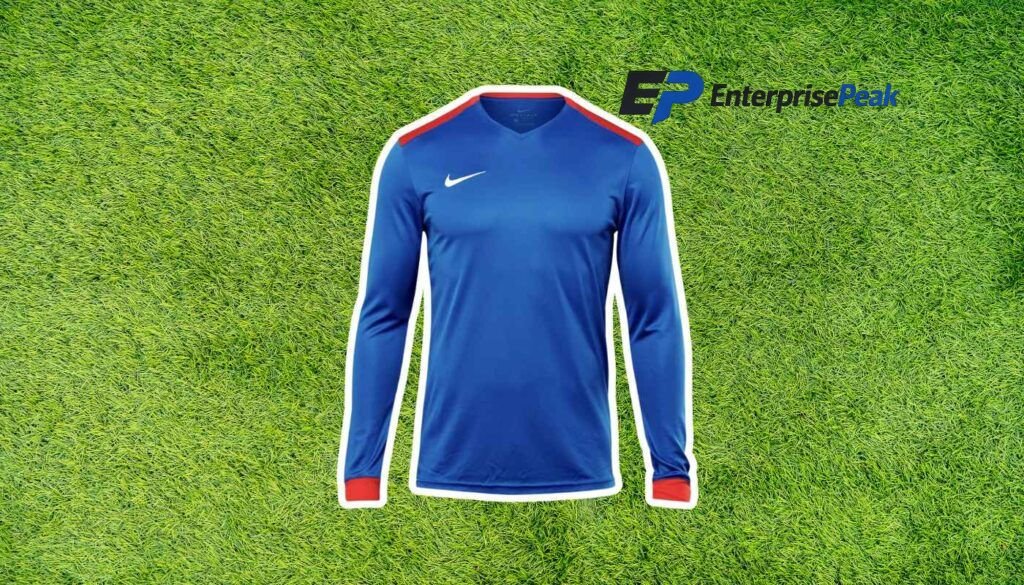
Your motivations for buying something change entirely according to whether you are shopping for yourself or for an entire team. An individual gamer getting a casual game does not care much about what they wear, so they can simply wear any clothes they have. However, a team competing together in an organised league will most probably want to have identical uniforms which serve not only to help the referee and the opposing team differentiate the sides but also to improve the team’s performance by making them feel that they are a real team after all, which is why frankly looking like a team matters so much.
This is where ordering becomes a project rather than a purchase. Teams generally want a consistent colour, the option to print names or numbers, and enough sets that nobody is stuck in the wrong shirt when one person forgets theirs. Retailers like Soccer Lord stock the football kits and accessories that suit this kind of recurring five a side use, which makes restocking or matching an existing set more straightforward than hunting around different shops.
It’s easy to divide budget levels fairly clearly. Even a casual player can mix and match a suitable kit astros a technical shirt, shorts and grip socks, for something like 70 to 100. A team getting printed matching shirts will probably be paying about 20 to 35 each according to quality and size of order, and in most cases, buying more sets in one order reduces the per-unit price. A common mistake is to invest too much on official club shirts which were not designed to withstand the hard use of twice-weekly five a side matches.
What experienced London players prioritise over time
Talking to alleys of London five a side players for several decades, results of the survival factor hardly come up where brand features are concerned. The apparel that gets to keep its place is the one that is thoroughly cleaned, dried overnight on a radiator and ready to be put back into the kit bag for the next match. Quick- drying fabric is definitely not a luxury when you play Monday and Thursday, and the shirt will not really have any chance to breath properly otherwise.
The weather changes the whole idea of the calculation throughout the year as well. The outdoor cages used during the winter in London can get really cold and exposed. In that case thin baselayer polo and gloves become a matter of being worthwhile to carry around from roughly November till end of February. Summer indoor halls might be so warm and stuffy that the shirt which can breathe the best is suddenly pushed to the top of the priority list. Serious players end up having a quite small kit rotation rather than having just one fixed kit.
Something that even quite new players do not realize is that before every competitive game one should not only wear shoes that are comfortable but also ones that have been broken in. Since astro trainers with hard molded soles can result in blisters a couple of first times of usage, a couple of casual plays first with the shoes would save one from limping through a league fixture.
Before you start spending your money on football kit items, do yourself a favor and find out what surface your regular venue has and also check with them their footwear rules because this one piece of information will tell you more than any review could when it comes to making decisions about your dog-tag. Get shoes which are appropriate for your pitch, get fabrics that dry quickly and the rest of your available budget can be spent on those things which really make a difference and not on those things which only look the part.