
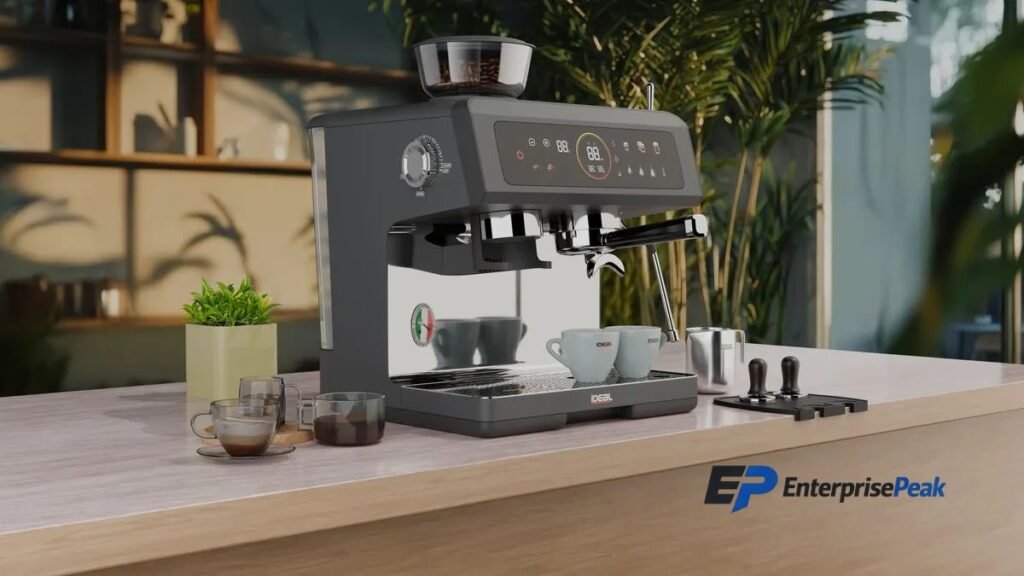

When Indian businesses search for the best coffee makers for office use, the questions driving that search are fundamentally different from consumer buying intent. Capacity, daily throughput, per cup cost at scale, service network availability, and total cost of ownership determine whether a machine delivers business value over its working life or becomes a recurring operational liability. The right coffee maker for an Indian office is the one that performs within its design parameters across a three to five year working lifecycle while delivering the lowest verifiable cost per cup at the volume the office generates daily.
What Separates a Business Grade Coffee Maker from a Consumer Machine
The distinction between a consumer grade and a business grade coffee maker is not primarily a question of price. It is a question of duty cycle. Consumer machines are built for low daily cycle counts, typically five to fifteen cups, and are not rated for the sustained throughput demands of an office environment. A machine designed for household use deployed in a thirty person office will reach end of productive life significantly ahead of its design lifespan, producing replacement expenditure that eliminates the saving achieved by selecting the lower cost unit at the outset. Business grade machines are built to a higher cycle count specification and are supported by service infrastructure that consumer products do not carry.
Matching Machine Capacity to Office Headcount
The most consequential procurement variable in this category is alignment between machine output capacity and actual daily usage volume. An undersized machine creates a service bottleneck at peak hours, drives employees to source beverages externally during working time, and degrades faster than its design specification predicts. For procurement teams identifying which specification matches their office size and daily consumption profile, Kaapi Machines’ coffee makers range documents output capacity across formats, enabling a structured comparison between machine specification and operational demand before any capital is committed.
Comparing Coffee Maker Formats on Business Terms
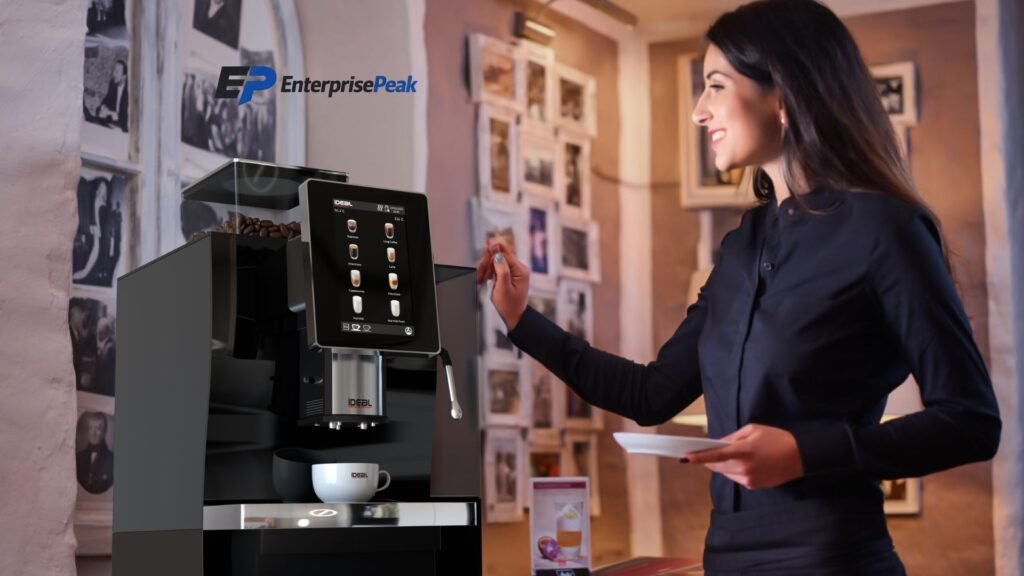
The three primary coffee maker formats available to Indian businesses are filter, pod based, and bean to cup, each carrying a distinct financial profile. Filter machines deliver high batch output at low per cup cost and suit environments where large volume brewing with minimal preparation overhead is the priority. Pod based machines offer consistent output per cup but carry consumable costs that become a material budget line at high daily volumes. Bean to cup machines offer the broadest output range and lowest per cup cost at volume, making them financially appropriate for offices with higher headcount. For businesses evaluating high volume automated options, the automatic coffee machines range provides commercial specifications suited to continuous output in shared office environments with minimal operator dependency.
Factoring Serviceability Into the Buying Decision
The best coffee maker for office use is not only the one with the most appropriate output specification for the operating environment. It is the one backed by a service network capable of maintaining uptime at the level the business requires. Machines without authorised service coverage in the buyer’s city introduce a downtime risk that affects employee productivity and, in client facing settings, professional credibility. Procurement teams should verify technician availability, average response time, and annual maintenance contract terms before committing to any machine, regardless of how well the unit specification aligns with the office’s daily volume requirements.
Making the Final Buying Decision on Financial Evidence
The best coffee makers for Indian office use are identified through a buying process grounded in operational data rather than brand recognition or unit price. Procurement teams that verify daily usage volume, model total cost of ownership across a three year horizon, and assess vendor service capability before purchase consistently select machines that deliver lower total expenditure and more predictable performance than those chosen on specification alone. The financial return on a well specified coffee maker procurement decision compounds across every year of the machine’s working life and protects the facilities budget from absorbing avoidable replacement costs.