
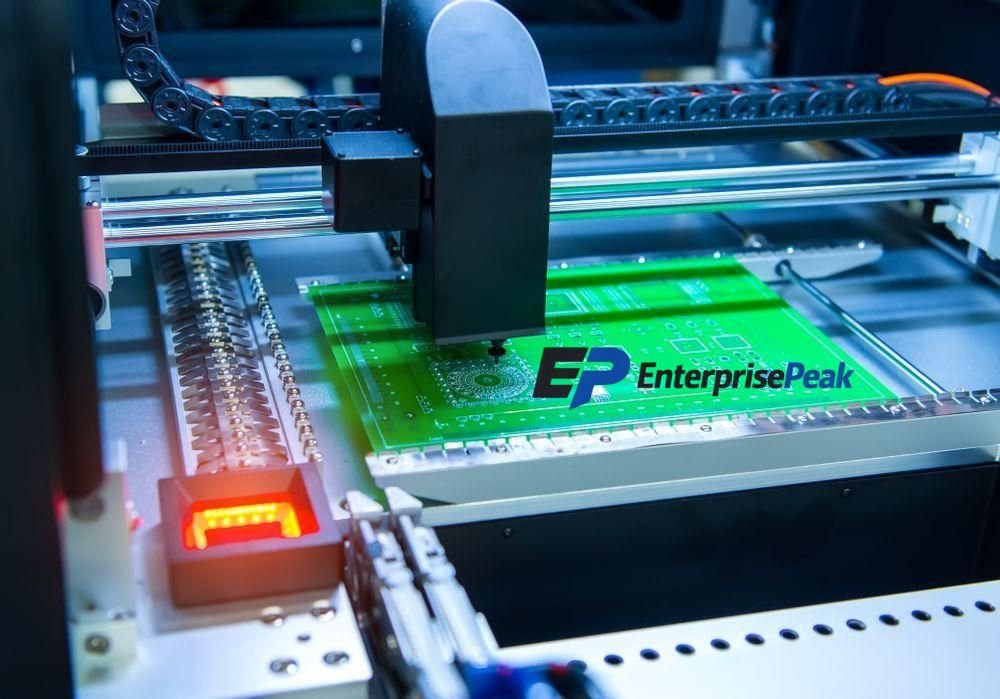

Printed circuit boards form the foundation of virtually every modern electronic product, from industrial equipment to IoT devices, medical electronics, and consumer gadgets. Many businesses focus heavily on component selection and functionality when developing PCBs, often overlooking the financial impact of poor design choices made during the PCB layout stage. Even seemingly minor mistakes can lead to production delays, lower manufacturing yields, costly redesigns, and increased assembly expenses.
The good news is that most of these PCB design issues are preventable. By understanding the most common mistakes and implementing best practices early in the design process, companies can reduce production costs while improving product quality. Here is a list of the 7 most common PCB design mistakes that increase product costs and how to avoid them.
1. Ignoring Design for Manufacturability (DFM) Guidelines
One of the most expensive mistakes in PCB development is designing a board without considering how it will actually be manufactured.
Every PCB manufacturer has specific capabilities and limitations related to trace widths, spacing, drill sizes, solder mask clearances, and board tolerances. When designers fail to follow these guidelines, manufacturers may need to use specialized fabrication processes or reject the design altogether.
The result is often additional engineering time, redesign costs, and production delays.
How to Avoid It
- Consult your manufacturer’s production capabilities before starting the layout.
- Run DFM checks throughout the design process.
- Involve fabrication and assembly partners early in product development.
- Design within standard manufacturing tolerances whenever possible.
A PCB that is easy to manufacture will almost always cost less than one that pushes fabrication limits unnecessarily.
2. Using Traces That Are Too Narrow
Many designers attempt to maximize routing density by using extremely narrow traces and tight spacing throughout the board. While this may appear efficient, it often increases manufacturing complexities and costs.
Narrow traces require higher-precision fabrication processes and can lead to greater defect rates during etching. In addition, undersized traces carrying significant current can create heat-related reliability issues.
Some engineers also use advanced geometries in areas where standard routing would work perfectly well, creating unnecessary production challenges.
How to Avoid It
- Use the widest trace widths possible for the application.
- Calculate trace widths based on current requirements.
- Reserve ultra-fine routing only for high-density areas, such as BGAs.
- Follow industry standards for spacing and clearance.
Larger traces not only reduce manufacturing costs but also improve long-term reliability.
3. Overusing PCB Layers
Adding more PCB layers can simplify routing, but it also increases manufacturing expenses. Each additional layer adds material costs, lamination cycles, inspection requirements, and fabrication complexity. Multilayer boards also require tighter registration tolerances during production.
In some cases, designers jump from a four-layer board to a six- or eight-layer design simply to make routing easier, even when alternative layout strategies could achieve the same result.
How to Avoid It
- Optimize component placement before increasing layer count.
- Improve routing efficiency using proper floor planning.
- Consider increasing board dimensions before adding layers.
- Reserve higher-layer-count designs for genuinely complex applications.
A well-designed four-layer PCB is often significantly more cost-effective than an unnecessarily complex six-layer alternative.
4. Poor Component Placement
Component placement influences far more than board appearance. It affects assembly efficiency, thermal management, signal integrity, testing, and manufacturing costs.
Poor placement can create routing congestion, increase trace lengths, form hot spots, and complicate automated assembly processes. Components positioned too closely together can also make inspection and soldering more difficult.
Many experienced manufacturing engineers identify component spacing issues as one of the most common causes of assembly problems.
How to Avoid It
- Group functionally related components together.
- Keep high-speed circuits compact.
- Allow sufficient spacing for automated assembly equipment.
- Position heat-generating components to support airflow and heat dissipation.
- Follow manufacturer recommendations for placement clearances.
Thoughtful placement can significantly reduce both assembly costs and future troubleshooting expenses.
5. Excessive Use of Specialized Vias
Vias are essential for connecting layers within a PCB, but not all vias are created equal.
Standard through-hole vias are relatively inexpensive. However, blind vias, buried vias, stacked microvias, and via-in-pad structures require additional manufacturing steps, specialized equipment, and more complex quality control procedures.
Designers sometimes overuse these advanced structures simply because they are available rather than because they are necessary.
How to Avoid It
- Use standard through-hole vias whenever possible.
- Limit microvias to applications that truly require them.
- Avoid stacked microvias unless performance demands it.
- Review whether advanced via structures provide measurable benefits.
Reducing unnecessary via complexity can substantially lower fabrication costs, particularly in medium- and high-volume production.

6. Incorrect Component Footprints
A PCB can be electrically perfect and still fail during assembly because of incorrect footprints.
Footprints define the physical dimensions and pad configurations used to mount components. Errors in footprint libraries can lead to soldering defects, component misalignment, rework, or complete prototype failure.
Many teams rely on third-party libraries without verifying them against manufacturer datasheets, which introduces unnecessary risk. The cost impact can be substantial because footprint errors are often discovered only after prototypes arrive.
How to Avoid It
- Verify every footprint against the manufacturer’s datasheet.
- Use supplier-recommended land patterns.
- Review component libraries regularly.
- Include footprint verification in design reviews.
A few minutes spent validating footprints can save weeks of redesign and assembly delays.
7. Neglecting Testing and Validation Requirements
Many PCB designs are optimized for functionality but not for testing. If engineers fail to include adequate test points or design for inspection, manufacturing and troubleshooting become significantly more expensive. And boards that are difficult to test often require additional manual labor, specialized fixtures, or time-consuming diagnostics.
Similarly, skipping design reviews and prototype validation can allow costly mistakes to reach production. Industry discussions consistently highlight insufficient test access as a recurring issue that increases manufacturing challenges and delays.
How to Avoid It
- Include accessible test points for critical signals.
- Design with automated testing in mind.
- Conduct peer reviews before fabrication.
- Perform thorough prototype validation.
- Simulate thermal, power, and signal integrity performance where appropriate.
The cost of testing during development is almost always lower than the cost of diagnosing failures after production begins.
Conclusion
PCB design is about much more than creating a board that works. It is about creating a product that can be manufactured efficiently, assembled reliably, tested easily, and produced at a competitive cost.
The most expensive PCB mistakes rarely involve catastrophic engineering failures. More often, they stem from avoidable decisions such as ignoring manufacturability guidelines, using overly aggressive routing, selecting incorrect footprints, or neglecting testing requirements.
By prioritizing manufacturability, verification, and cost-conscious design practices from the start, businesses can reduce production expenses, improve product reliability, and accelerate their path to market, resulting in a business advantage.