
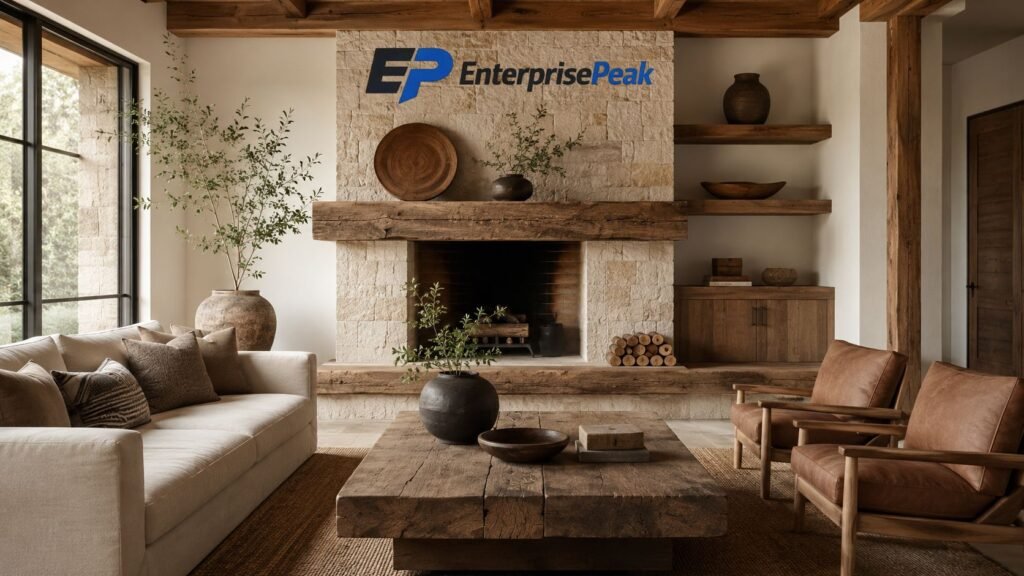

Fashion and interior design cycles move quickly. What reads as contemporary one season can feel dated the next, and the pressure to keep up with those cycles is one of the less enjoyable aspects of paying attention to how things look. Against this backdrop, the bold and rustic aesthetic stands as something different. It does not rely on trends to justify itself. It draws from a set of values, honesty of material, quality of making, warmth of character, that are not time-sensitive. And that durability is precisely why it continues to attract people who want to invest in how things look rather than simply rent an aesthetic for a season.
The rustic direction has its roots in the honest use of natural materials. Wood is wood, with its grain, its knots, its variation in tone. Stone reads as stone, with the weight and texture that no manufactured surface convincingly replicates. Metal carries the marks of how it was worked, whether that is the depth of a hand-forged edge or the warmth of a brushed finish. These materials are not trying to be anything other than what they are, and that honesty is what gives them their appeal.
Bold sits alongside rustic not as a contradiction but as a complement. Bold choices in natural materials, a statement timber table, a stone-clad fireplace wall, a striking leather chair, achieve their impact without artifice. The boldness comes from the material itself, not from an excess of decoration or a deliberate attempt to be striking. This is restraint deployed at the service of impact, which is a very different thing from either minimalism or maximalism.
Why Bold and Rustic Endures
The appeal of Bold & Rustic as an aesthetic direction connects directly to a broader cultural shift. There is growing awareness that fast production and disposable goods carry hidden costs, both personal and environmental. Objects made quickly from synthetic materials wear out quickly, look unconvincing quickly, and eventually contribute to a waste stream that is difficult to ignore.
Natural materials behave differently over time. Oak develops a patina. Leather softens and conforms. Linen washes to a more beautiful state than it started. Stone weathers in ways that are consistently beautiful. These are materials that improve with age and use rather than degrading, and the bold and rustic aesthetic is built around choosing them deliberately.
For interiors, this translates into spaces that feel genuinely lived in rather than staged. There is a warmth to a room finished in timber, natural stone, and hand-woven textiles that simply cannot be manufactured through synthetic equivalents. Light behaves differently on natural surfaces. Sound moves differently through rooms with these textures. The experience of being in a space designed around natural, rustic materials is noticeably different from one that relies on smooth manufactured finishes.
For fashion and personal style, the same logic applies. Garments made from natural fibres, accessories crafted in leather or metal with visible hand-finishing, and a palette rooted in the colours of earth and stone create a look that reads as considered and authentic. It does not age in the way that trend-chasing choices do. It deepens.
Applying the Aesthetic
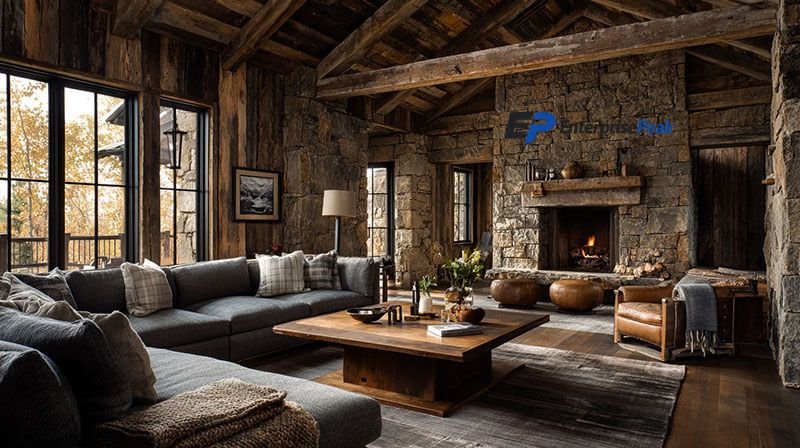
The risk with any strongly defined aesthetic direction is over-application. Rustic elements work at their best when they are given space to be seen, not when every surface is competing for attention. The principle of restraint, choosing fewer things and choosing them well, applies here as much as it does in any other design context.
In an interior, this might mean a single statement piece of reclaimed timber furniture in a room that is otherwise calm. Or it might mean a stone worktop in a kitchen whose cabinetry is simple and painted in a neutral tone, allowing the material to carry the visual weight. In a wardrobe, it might mean a beautifully made leather belt or a heavyweight wool coat in a natural earth tone around which other pieces are chosen to recede.
The test of whether a bold and rustic element is working is whether it feels like it belongs or whether it feels like it has been placed. Materials that are genuinely of the quality the aesthetic demands tend to settle into their context naturally. They do not announce themselves. They are simply present, and the space or outfit reads as coherent and considered as a result.
Frequently Asked Questions
Does the bold and rustic aesthetic work in contemporary architecture? It works particularly well in contemporary settings because the contrast between clean architectural lines and natural material textures is visually powerful. Modern spaces with exposed timber, stone, or aged metal elements create an interesting tension that neither pure minimalism nor a fully traditional aesthetic achieves.
Is this aesthetic expensive to achieve well? Quality natural materials do carry a cost, but the investment model is different from trend-led buying. Pieces chosen for their material quality and honest construction tend to last significantly longer and retain their appeal, making the cost per year of use more favourable than cheaper alternatives that need replacing.
Can the rustic aesthetic work in small spaces? Yes, with selection based on scale. A single well-chosen natural material element, such as a timber shelf, a stone-topped side table, or a woven textile piece, introduces the aesthetic without overwhelming a compact room. The key is allowing each element to be seen.
How do I incorporate bold and rustic into an existing interior without starting from scratch? Begin with one or two anchor pieces in natural materials that work with what you already have. A reclaimed wood coffee table in a room with neutral upholstery, or a stone-effect splashback in a kitchen that otherwise stays simple, can shift the character of a space significantly without wholesale change.
What colours work best with the bold and rustic aesthetic? Earth tones and natural palettes form the most coherent foundation. Warm whites, stone greys, deep forest greens, ochres, terracottas, and wood tones all sit naturally together. The palette supports the materials rather than competing with them.