
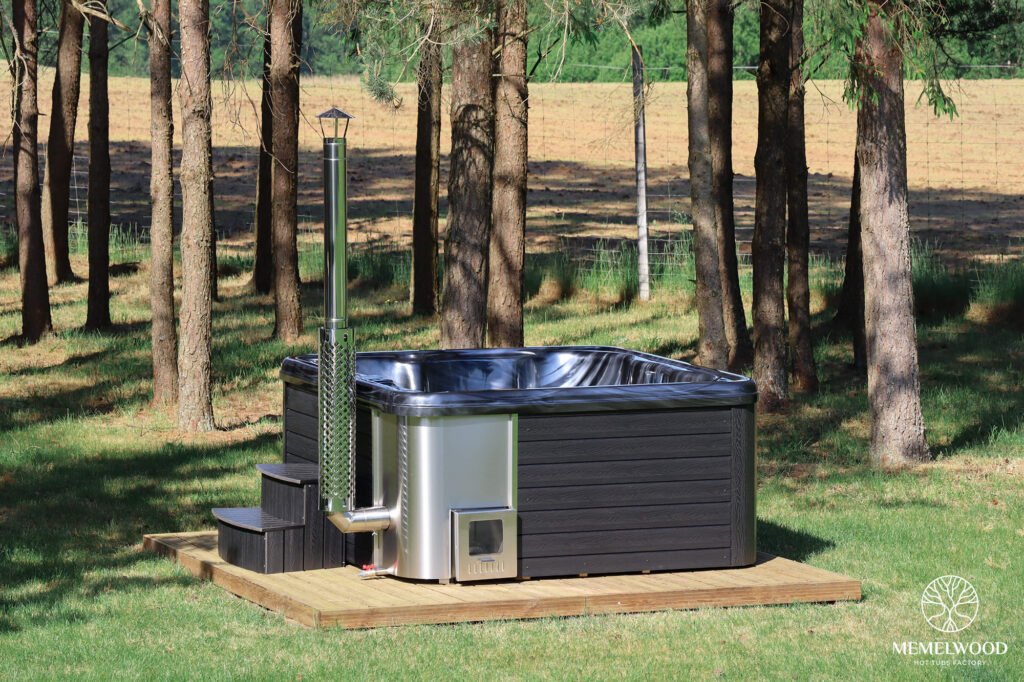

The second-hand market actually reflects quite a few things. Check Facebook Marketplace or eBay any evening and you’ll notice that there are loads of acrylic Jacuzzis up for sale for very cheap prices compared to the original ones, the captions being mostly the same and reflecting the owner’s frustration: “barely used, needs gone.” Ten years back there were hardly any of such listings. In 2026 however they have become normal.
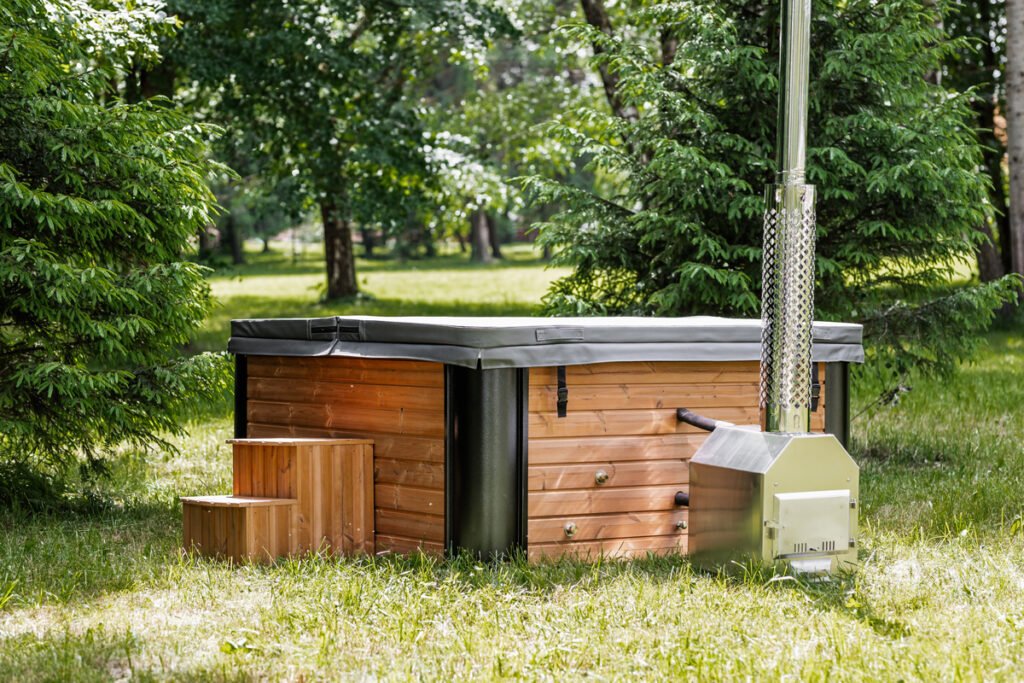
Therefore, what is replacing the plastic tub in many British gardens is something that would have appeared very strange in 2015: a wood-fired cedar or thermowood barrel, most of the time without jets, being heated by a small stove that almost protrudes at one side. Enough people have made the switch so that it is changing the entire domestic hot tub category.
Nostalgia isn’t one of the main reasons for the trend, and it’s not even only the look, although they both matter to some extent. People who changed their old acrylic tubs profess mostly practical reasons leading to the decision and also a strong liking for the wood-fired tub. When you hear the same cause stated a number of times, a the picture gets clearer.
The Frustrations That Drove the Switch
Many ex-Jacuzzi owners, when recalling their past experiences, get to the topic of running costs. An average-sized acrylic tub kept continuously at 38 degrees requires an electricity cost of anywhere between 800 and 1,500 per year according to research, with very inefficient older models potentially requiring even more. Besides, the cost of bromine or chlorine, replacement filter cartridges, occasional pump or heater element failures also contribute to the annual cost which is rarely below four figures.
Some owners continue to pay the price while they actually enjoy the hot tub but they look back at the cost with resentment when the newness fades. To me, one of the major errors is, as described by many people, when they realized their electricity bill was high, looked at the hot tub that was not used in the garden and did the calculations. This is indeed, in many cases, the trigger for change.
Chemicals used are a whole other thing. Ensuring an acrylic tub is safe for use involves a fairly regular sequence of test, dose, and rebalance. And even the ones that are most well maintained, can still result in dry skin, hair feeling stripped, and the garden having the faint smell of a public swimming pool. This is the kind of feedback that households with kids and those with sensitive skin get as a result rather than what the marketing materials imply.
What Wood-Fired Offers That a Jacuzzi Can’t
The appeal of wood-fired hot tubs starts with the complete absence of all the things owners complain about. No standing electricity cost. No pumps running twenty-four hours. No chemical regime beyond a much gentler approach if you use any at all. No control panel to fail.
Instead, you may light a stove at noon and the water is heated in two to three hours depending initially on the temperature of the water and the environmental conditions. It is so nice to see the temperature going up, then adding another log, and finally stepping in at the gauge number which you consider right.
They say it is part of the experience that they would not mind doing, far from it, for most Jacuzzi owners a change in their chemical routine is a nuisance. Silence is another thing converts mention a lot. A wood-fired tub is so quiet in a garden, the only thing one hears may be the crackling of the burning wood in the stove. No pumping noise, no filter cycling, and no low-frequency humming filling up the space. Soaks in the evening are genuinely especially refreshing while those ones with jet-powered acrylic tubs are at times unable to offer that kind of relief.
The Practical Trade-Offs Worth Knowing About
That doesn’t mean wood-fired tubs are the best choice for all households, and saying they are will only lead to those who get them feeling let down in the end. The main genuine disadvantage in this case is the heating time. If you want to have 38-degree water ready when you change your mind on the spot, a wood-fired tub will definitely not be your option; you have to organize your bath two or three hours in advance.
Some owners go one step further and heat their tubs in the afternoon for a night soak, and after a while it becomes their normal habit. Others who, in the past, relied on their Jacuzzi for quick ten-minute dips before work just give it up and cross out high-frequency short sessions from their lives because they are replaced with the low-frequency longer ones. So, a downgrade or an upgrade will be a matter of how you were actually using the old tub.
Also, it is quite a good point to discuss the jets openly. The majority of wood-fired tubs actually don’t have them, and although almost everyone says they stopped missing them after a few weeks, there are still those who do. If your hot tub purchase was motivated by the fact that you wanted to have hydrotherapy on a sore back, then changing to a wood-fired one would probably be a mistake. On the other hand, if the main thing for you is the social soak and relaxation, you will see that jets are much less important than the advertising suggested.
Making the Switch Without Losing Money
The real issue for homeowners, who want to change their tubs, is what should be done with the current acrylic tub. The solution varies with the age and condition of the tub. Usually, tubs which are less than five years old and have a functional heater and pump, get sold by their owners on Marketplace for about one-third of their new prices. The really old ones hardly get any buyers and most probably, they are collected as scrap by those who only want the motor.
It’s a good idea to consider disposal costs when planning the change. The cost of removing a full-sized acrylic tub from a back garden is between 200 and 500, based on how accessible it is and how much has to be cut inside the house. It’s not a very large amount of money, but it’s one of the expenses that people least expect when they’re already thinking of the exciting new purchase. The order of things is important as well. Switching over a summer weekend seems to be a popular option amongst most switchers: the old tub is removed on Friday, the base is checked and altered on Saturday, the new wood-fired tub is delivered and filled on Sunday. This does need some working out with the supplier, but it saves you having that awkward period when your garden is only half a feature for three weeks.
Who’s Really Suited and Who Isn’t
The swap works best when a household uses a bathtub as part of a fixed evening ritual rather than a spontaneous gadget. Couples who soak two or three evenings a week, families who use it at weekends, and anyone who already enjoys the process of lighting a fire tend to find the transition easy and rewarding.
Households with very young children sometimes struggle with the heating time and the stove itself, though external-heater models with safety guards address most of the concern. Older teenagers and adult guests usually find the whole setup more appealing than an acrylic tub, which becomes another quiet reason for the switch.
The Bottom Line on the Switch
The main reason why a huge number of British homeowners will be making this change in 2026 is not because of style. It is more a fact that the wood-fired type really solves the long-standing issues of the acrylic tub, and that at a lower running cost, with a better look and a more pleasurable experience for most people using a hot tub as they actually want to.
It is not that plastic tub is an outdated thing; many households still like the ease, and that’s a totally reasonable point of view. However, the constant arrival of used Jacuzzis in the second-hand market, and the simultaneous increase in wood-fired cedar and thermowood sales, indicate that quite a number of British hot tub owners have silently decided that they made the wrong choice first time around.