
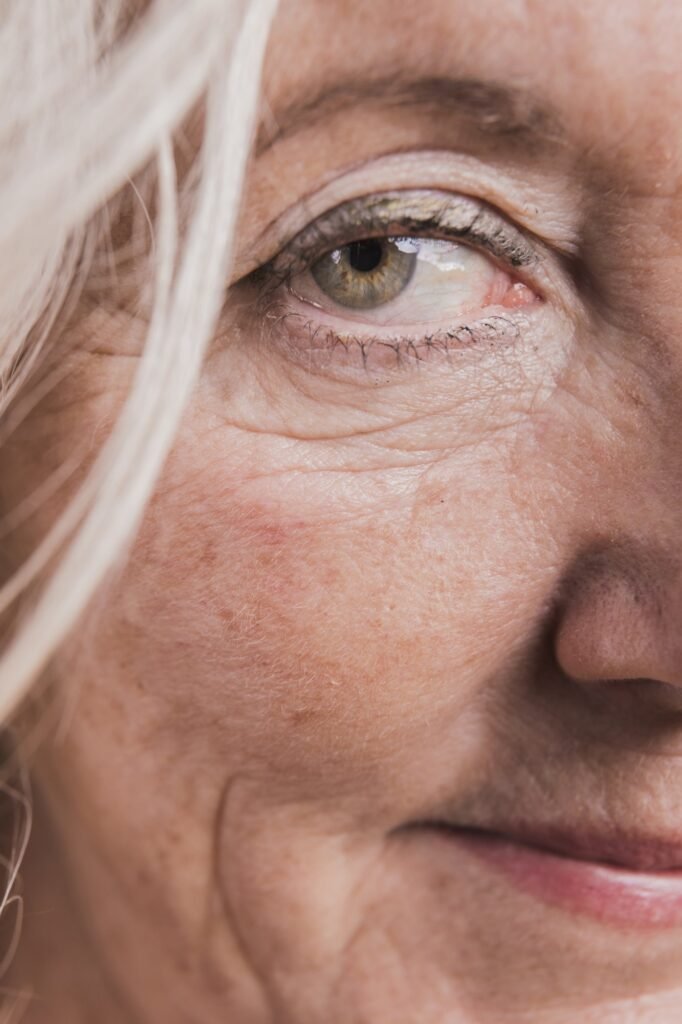

Ask most people where they first noticed themselves looking older and the answer is rarely the jawline or the neck. It is usually the eyes. A photograph catches a heavier upper lid, a mirror in harsh light shows puffiness that no longer fades by lunchtime, or a colleague asks whether you have been sleeping badly when you feel perfectly rested.
This is not vanity or imagination. The area around the eyes is one of the most delicate parts of the face, and it is often where the effects of time show up first. Understanding why can help people make calmer, better-informed decisions about whether to do anything about it, and what kind of help to look for.
The Thinnest Skin on the Face
The skin of the eyelids is among the thinnest on the body. It has very little fat beneath it and relatively few oil glands, which means it has less natural cushioning and dries out more easily than skin elsewhere on the face.
As we age, the body produces less collagen and elastin, the proteins that keep skin firm and help it spring back. On thicker skin, this change is gradual and often subtle. On the eyelids, where there is so little structure to begin with, loss of firmness becomes visible much sooner. Fine lines appear, the skin creases more easily, and the upper lid can begin to fold or hood.
Constant Movement Takes Its Toll
The eyes are rarely still. We blink thousands of times a day, squint in bright light, narrow our eyes when we concentrate and crinkle them when we smile. Each of these movements creases the skin in the same places, again and again.
Over years, these repeated movements contribute to the lines that form at the outer corners of the eyes. Long hours in front of screens, which often involve sustained focus and less frequent blinking, can add to tiredness and strain around the area, even if they are not a direct cause of ageing.
Changes Beneath the Surface
Not all eye ageing happens in the skin. Beneath the eyelids are small pockets of fat that cushion and support the eye. These are held in place by a thin membrane and supporting tissues that can weaken with age.
When that support loosens, fat can move forward and create the bags or puffiness that many people notice under their eyes. At the same time, volume loss in the cheeks can make the junction between the lower lid and the cheek more pronounced, creating a hollow or shadow that makes the face look tired.
Above the eye, the brow can gradually descend, adding weight to the upper lid. In some people, excess upper eyelid skin becomes significant enough to sit on the lashes or even affect the upper field of vision.
Lifestyle and Genetics Both Play a Part
Some people develop heavy lids or under-eye bags in their thirties, while others see little change until much later. Genetics plays a large role in this, which is why eye bags often run in families.
Lifestyle matters too. Sun exposure is one of the biggest external drivers of skin ageing, and the area around the eyes is often missed when applying sun protection. Smoking reduces blood flow to the skin and accelerates collagen breakdown. Poor sleep, alcohol and high salt intake can all increase fluid retention, making puffiness more noticeable from one day to the next.
What Can Help
Daily habits can make a real difference to how the eye area ages. Wearing sunglasses with UV protection, applying a gentle sunscreen suitable for the eye area, staying hydrated and getting consistent sleep all support the skin. A good eye cream may help with hydration and the appearance of fine lines, though no cream can remove excess skin or reposition fat.
Non-surgical treatments, such as skin boosters or carefully placed fillers, are sometimes used to improve hollowness or skin quality. These can be effective for the right person, but results vary and the area requires a high level of anatomical knowledge.
Where the main concern is excess or drooping eyelid skin, or prominent bags caused by fat, surgery is often the most effective option. Blepharoplasty, or eyelid surgery, removes or repositions excess skin and fat to create a fresher, more rested appearance. In some cases, where heavy upper lids affect vision, it is also carried out for functional reasons.
Choosing the Right Specialist
Because the eyelids are so closely connected to the health and function of the eye itself, anyone considering treatment in this area should look for a surgeon with specialist training in eyelid surgery. A thorough consultation should include an assessment of eye health, a clear explanation of what is realistically achievable, and an honest discussion of risks and recovery.
A good specialist will also tell you when treatment is not the right answer. Sometimes the most appropriate advice is a change in skincare, a different non-surgical approach, or simply reassurance.
A Natural Part of Ageing
Changes around the eyes are a normal part of getting older, and many people are entirely comfortable with them. For others, tired-looking eyes can feel at odds with how they actually feel, and that mismatch is often what prompts them to explore their options.
Either way, understanding why the eyes age first takes away some of the mystery. It also makes it easier to separate realistic options from marketing promises, and to make a decision that feels right for you.