
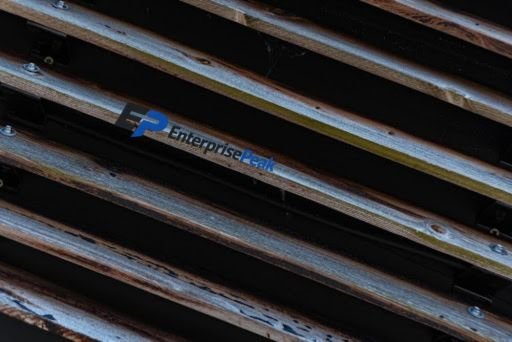

Yakisugi is a centuries-old Japanese charring technique that turns plain timber into a blackened, deeply textured surface, and it has become one of the most distinctive sustainable finishes in contemporary architecture. The appeal is immediate: a facade that reads as both ancient and strikingly modern, achieved with fire and oil rather than synthetic stains.
But the trend comes wrapped in a lot of myth. Many sources claim charring makes wood fireproof or rot-proof, while peer-reviewed research tells a more nuanced story about what the flame actually does to the board.
Separating folklore from evidence matters if you want to specify the right finish for cladding, fencing or decking. The science explains why the look is the real prize, why species choice drives longevity, and why a chemical-free charred surface suits green-building goals.
What Is Yakisugi (Shou Sugi Ban)? Meaning Explained
Yakisugi is a traditional Japanese method of charring timber, where yaki means burnt and sugi means cedar, producing a distinctive blackened surface with deep texture. The technique transforms ordinary boards into a striking, contemporary cladding material.
Crucially, yakisugi is both a process and a finished material, not merely a paint or coating. The carbon layer sits within the surface of the wood itself, because the timber is burnt rather than covered, giving the finish its depth and permanence.
The sequence is straightforward. The board is charred to develop a carbon-rich surface, cooled, then brushed to remove loose char. Finally, it is finished with oil that sets the final colour and texture and seals the surface.
A properly brushed and oiled board does not rub off in normal use, since the loose carbon has been removed and the surface is locked in with oil. This stability makes charred timber practical for cladding, fencing and everyday contact areas.
Depending on the species and finishing, yakisugi produces a wide range of shades, from deep black and carbon to anthracite grey, teak and mahogany tones. This versatility links the ancient craft directly to modern design intent, giving architects and self-builders a refined, low-maintenance finish for contemporary exteriors.
Yakisugi vs Shou Sugi Ban: Are They the Same Thing?
Yes, both terms describe exactly the same charring technique. Yakisugi is the original and correct Japanese term, while shou sugi ban is a Western reading of the same kanji that spread outside Japan.
The difference is linguistic, not technical. The characters 焼杉 can be read in more than one way, and an alternative pronunciation took hold in English-speaking architecture and design media. As a result, shou sugi ban became the popular label abroad, even though Japanese craftspeople rarely use it.
This is one of the most searched terminology points on the topic, because the two names look unrelated yet mean the same thing.
Today architects, cladding suppliers and design publications use both interchangeably. A board described as yakisugi or shou sugi ban refers to the identical charred timber finish, so seeing either term should not cause confusion.
The History and Origins of Yakisugi
The technique is thought to have emerged in the 1600s in the Edo region of Japan, present-day Tokyo, according to a USDA Forest Service study by Hasburgh et al. (Forests 2021). It developed as a practical response to a specific urban problem.
Edo’s densely built timber cities frequently suffered catastrophic fires. Charring the surface of boards was used to fire-harden homes, because a carbon layer protects the wood beneath and slows ignition.
Charring wood for protection is not unique to Japan. In the United States, charring the bottoms of fence posts to prolong their service life has been studied as a wood-protection method since at least 1927, showing the principle was understood across cultures.
The method then declined through the mid-20th century as industrial materials such as concrete, brick and synthetic cladding spread. For decades, charred timber survived mainly in rural Japanese building traditions.
A global revival followed from the 2000s, led by architects drawn to its deep texture, matte tones and chemical-free finish. This renewed interest also connected the material to a wider sustainability conversation in contemporary design.
Much of that appeal traces back to wabi-sabi, the Japanese philosophy that values natural texture, age and imperfection. Yakisugi embodies this aesthetic, which is precisely why charred timber resonates with modern exteriors, garden rooms and feature walls today.
The Science Behind Yakisugi: What Burning Actually Does
Surface charring modifies only the outer 2-3 mm of a board, leaving a protective shell of char over the solid wood beneath, according to Hasburgh et al. (Forests 2021). The flame transforms the surface layer while the core remains untouched.
This makes charring fundamentally different from thermal modification. Thermal modification heats the entire piece to 160-220°C in an inert environment, improving dimensional stability and reducing moisture uptake throughout the board, not just at the surface.
The research proposes three mechanisms by which charring may add durability:
- Removing surface carbohydrates that fungi feed on
- Forming a hydrophobic char layer that repels water
- Infusing the wood with smoke volatiles that may resist fungal growth
Of these, the most consistently reported benefit is a water-shedding surface. The char layer makes the wood more hydrophobic, therefore lowering the rate at which it absorbs liquid water.
That water-shedding quality matters for cladding and fencing exposed to rain, since surfaces that absorb less moisture tend to stay drier between wet spells. The science behind the look is real, but as the same study makes clear, the durability story is more nuanced than folklore suggests.
What the Evidence Does and Doesn’t Show
Charring is no guaranteed shield. In controlled USDA testing across six species and multiple char levels, the shou sugi ban process did not systematically improve flammability or decay resistance, and was about as likely to increase decay as reduce it (Hasburgh et al., Forests 2021).
The researchers concluded that charred wood “should be thought of as primarily increasing the aesthetics of wood rather than improving the durability or flammability.” This places the value firmly in look and texture, not protection.
Only cypress showed a small statistically significant gain in decay resistance and ignition time. Yet even charred cypress still lost about 34% of its mass in the 12-week decay test, so the improvement remained modest.
By comparison, established methods such as acetylation, furfurylation, thermal modification and chemical preservatives all improve decay resistance more than charring alone.
The practical takeaway is simple: the char delivers the dramatic surface and a water-shedding effect, while real-world longevity comes mainly from the species and finishing you start with. This is why pairing the technique with naturally durable or modified timber matters far more than the burn itself.
Is Yakisugi Sustainable? Why Charred Wood Became a Design Trend
Yakisugi is a sound sustainable choice because the finish is achieved with fire and oil rather than chemical preservatives, making it a low-toxicity surface for cladding, decking and fencing. The colour and texture come from the char itself, not from synthetic stains or coatings.
The longevity logic is honest and worth understanding clearly. Durability comes mainly from the timber you start with, so charring a naturally durable or modified species means a chemical-free finish on wood that resists weather and decay. As a result, fewer replacements are needed over the years.
Maintenance stays minimal too. A charred, oiled surface needs only periodic re-oiling rather than frequent repainting or restaining, which reduces ongoing material use and labour over a building’s lifetime.
This combination explains why charred wood became a modern design trend. Architects and self-builders value the deep, matte, textured aesthetic that suits contemporary exteriors, garden rooms and feature walls, while the chemical-free finish aligns with green-building priorities.
Sustainability here rests on responsible sourcing and careful manufacturing rather than absolute environmental claims. The most defensible benefits are aesthetic distinctiveness and a water-shedding surface, with real-world performance grounded in species selection.
TimberSol works to this principle by charring naturally durable and modified species such as larch, oak, Accoya and Thermowood. The look comes from the char, and the longevity comes from the timber, without relying on harmful chemicals to do the work.
Yakisugi for Exteriors, Interiors and Gardens
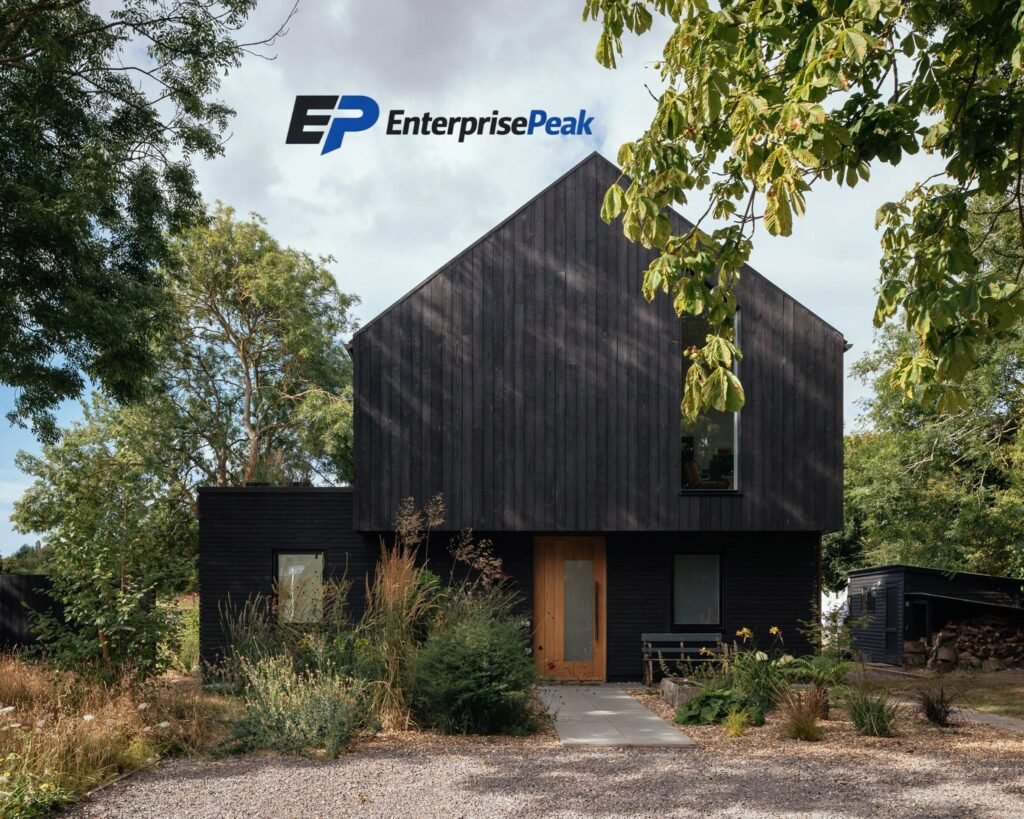
Charred cladding finds its primary home on house exteriors, extensions and garden rooms, where the dark, textured surface delivers a distinctive modern character and sheds rainwater well. The matte char absorbs light differently from painted boards, giving facades depth that flat coatings cannot match.
Fencing and decking rely far more on species choice, since these applications face ground contact and prolonged wet conditions. Naturally durable or modified timbers such as larch, oak, Accoya and Thermowood are therefore preferred, because the char sets the look while the timber carries the longevity.
Indoors, charred boards work beautifully as feature walls and accents. The tactile surface and deep matte tones add warmth and texture without paint, suiting living rooms, hallways and commercial interiors alike.
Colour and profile choices shape the final effect considerably. Common shades include:
- Black, carbon and anthracite grey for bold, contemporary facades
- Stone grey for a softer, weathered look
- Teak and mahogany for warmer, timber-led tones
Profiles such as shiplap, shadow gap and feather edge change how shadows and joints read across a wall, so the same shade can feel quite different depending on the board layout.
Because colour shifts in real daylight, ordering a sample is a sensible first move before committing to a full order of charred timber cladding, letting you judge tone and texture on site.
Yakisugi: Frequently Asked Questions
What Is the Japanese Yakisugi Technique?
Yakisugi is the traditional Japanese method of charring timber, historically cedar, to create a distinctive blackened surface with deep texture. The flame transforms the outer layer of the board into a carbon-rich finish.
The process follows a clear sequence: the surface is burned, cooled, brushed clean to remove loose char, then usually finished with oil to set the colour. Brushing controls how much carbon remains, which shapes the final look.
It is both a process and a finished material, used today for cladding, fencing and decking on contemporary projects.
What Is the Science Behind Yakisugi?
Charring modifies only the outer few millimetres of the board, creating a carbon-rich, water-shedding layer over solid wood beneath. The core stays untouched, so the structure of the timber is unchanged.
Researchers propose three mechanisms: removing surface carbohydrates that fungi feed on, forming a hydrophobic char layer, and depositing smoke volatiles that may resist fungal growth.
But the most consistent, evidence-backed benefit is reduced liquid-water absorption rather than guaranteed fire or decay resistance. According to Hasburgh et al. (Forests 2021), charring should be seen as primarily an aesthetic treatment.
Is Shou Sugi Ban Sustainable?
Shou sugi ban is a strong sustainable option because the finish uses no chemical preservatives, only fire and oil. This makes it a low-toxicity surface for exterior and interior use.
Pairing the char with naturally durable or modified species such as larch, oak, Accoya and Thermowood means fewer replacements and minimal upkeep over time. Durability comes from the timber, while the char delivers the look.
Its relevance to green-building goals rests on responsible sourcing and low-toxicity finishing rather than absolute environmental claims.
Does Charred Wood Rub Off on Your Hands?
A properly brushed and oiled yakisugi board does not rub off in normal use, because the loose char is removed during brushing and the surface is then sealed with oil. The carbon that remains is bonded into the wood, not sitting loose on top.
Periodic re-oiling keeps the finish stable and refreshes the colour over the years. This makes charred cladding and fencing practical for everyday contact areas, including walls and gates without leaving black residue on hands or clothing.
The most honest way to read the evidence is this: yakisugi delivers its strongest, most defensible value through aesthetics and a clean, water-shedding finish, while genuine longevity comes from choosing the right timber to begin with.
If you are planning cladding, fencing or decking for a home extension, garden room or feature wall, you can compare shades like Carbon, Anthracite Grey, Stone Grey, Mahogany and Teak, then order a sample to feel the finish in person. Browse our range of charred timber and let the material and craft speak for your next project.