
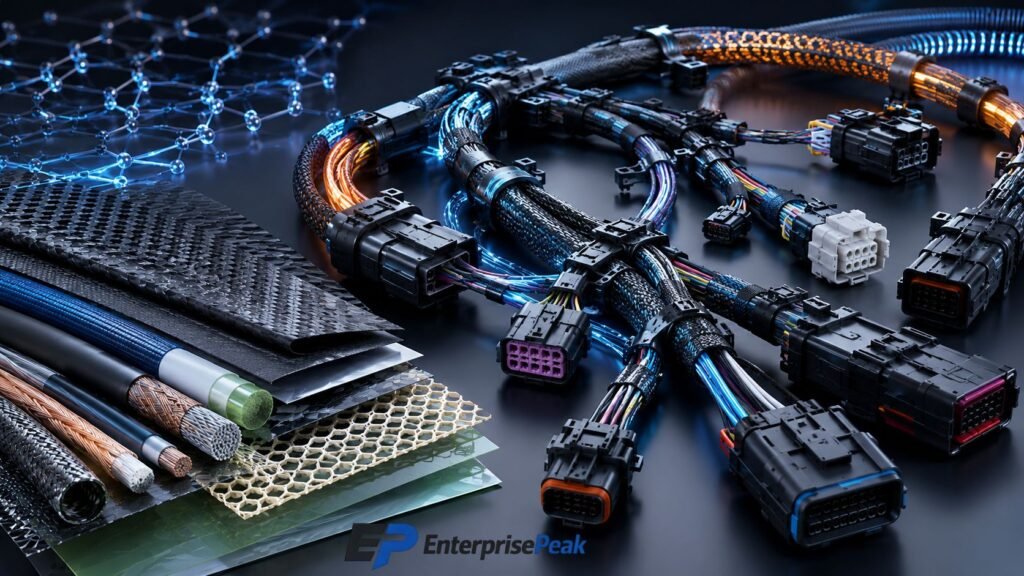

As modern vehicles, industrial machinery, aerospace systems, medical devices, and consumer electronics become increasingly sophisticated, the demands placed on wiring harnesses continue to evolve. No longer viewed as simple bundles of wires, today’s wiring harnesses serve as critical infrastructure for power distribution, data transmission, sensor communication, and system integration.
This sophistication is driving the development of next-generation wiring harness materials, and manufacturers are seeking solutions that are lighter, more durable, thermally resistant, environmentally sustainable, and capable of supporting higher data transfer rates. As a result, innovation is occurring across every component of the wiring harness ecosystem, from conductors and insulation materials to shielding technologies, protective jackets, and even embedded electronics.
Understanding these emerging materials provides valuable insight into how wiring harness technology will evolve over the next decade and what to expect from future electrical interconnection systems.
- Conductor Materials
Copper has long been the industry standard for wiring harness conductors due to its excellent electrical conductivity, durability, and affordability. However, increasing pressure to reduce weight and improve efficiency has encouraged engineers to explore alternative conductor materials.
- Copper Alloys
Modern copper alloys combine the conductivity of traditional copper with enhanced mechanical strength and improved corrosion resistance. By incorporating elements such as silver, magnesium, or tin, manufacturers can create conductors that withstand higher operating temperatures and harsher environments without sacrificing electrical performance.
These alloys are becoming increasingly common in automotive, aerospace, and industrial applications where reliability is essential.
- Aluminum Conductors
Aluminum is a lightweight alternative to copper, particularly in electric vehicles and aircraft. Aluminum conductors weigh approximately 50% less than equivalent copper conductors, helping manufacturers achieve significant weight reductions. Although it has lower conductivity than copper, advancements in conductor design and connector technology have made it a viable solution for many high-current applications.
- Silver-Plated and Nickel-Plated Conductors
High-performance environments often require enhanced conductor protection, and silver-plated copper conductors offer superior conductivity and thermal performance, making them suitable for aerospace, military, and high-frequency communication systems.
On the other hand, nickel-plated conductors provide excellent resistance to oxidation and extreme temperatures, enabling reliable performance in harsh operating conditions where standard copper conductors may degrade over time.
- Carbon Nanotube and Graphene-Based Conductors
While still largely in the research phase, carbon nanotube (CNT) conductors and graphene-based materials represent some of the most promising developments in electrical conductivity.
These materials offer extraordinary strength-to-weight ratios, high current-carrying capabilities, and exceptional thermal conductivity. Future wiring harnesses may incorporate CNT composites that dramatically reduce weight while maintaining or even exceeding the performance of traditional metal conductors.
- Insulation Materials
Insulation serves as the primary barrier protecting conductors from electrical leakage, short circuits, and environmental exposure. As electrical systems become more powerful and compact, insulation materials must withstand increasingly demanding conditions.
- Cross-Linked Polyethylene (XLPE)
XLPE has become a preferred insulation material in automotive and industrial applications due to its excellent thermal stability, chemical resistance, and mechanical durability.
Compared to conventional PVC insulation, XLPE can withstand higher temperatures while maintaining flexibility and electrical integrity. This allows harnesses to operate safely in high-heat environments, such as EV battery systems and industrial equipment.
- Thermoplastic Elastomers (TPE)
TPE materials offer an attractive combination of flexibility, durability, and environmental resistance. They remain flexible at low temperatures while resisting oils, chemicals, and abrasion.
These properties make TPE particularly valuable in robot cable assemblies, automation systems, and outdoor equipment where constant movement and environmental exposure are common.
- Fluoropolymer Insulation
Waterproof wire harness manufacturers are increasingly looking towards materials like PTFE (Teflon), FEP, and PFA because they resist extreme temperatures, chemical exposure, moisture intrusion, and UV radiation. Their ability to maintain performance in demanding environments makes them ideal for mission-critical applications, such as aerospace, defense, and medical systems.
- Bio-Based and Sustainable Insulation
Sustainability initiatives are driving the development of renewable insulation materials derived from plant-based polymers and recycled compounds. They include bio-based TPUs, heat-shrink tubing, and plasticizers. While still emerging, these eco-friendly alternatives aim to reduce environmental impact without compromising performance, supporting broader efforts toward sustainable manufacturing practices.
- Advanced Shielding Materials for High-Speed Data Transmission
As vehicles and industrial systems become increasingly connected, electromagnetic interference (EMI) presents a growing challenge. Modern wiring harnesses must support high-speed data communication while protecting signals from external electrical noise.
- Enhanced Copper Braided Shielding
Traditional braided copper shields continue to evolve with tighter weave patterns and improved coverage rates. These advancements increase EMI protection while maintaining flexibility, factors that are essential in applications involving Ethernet communication, advanced driver-assistance systems (ADAS), and industrial networking.
- Aluminum Foil Shielding
Lightweight aluminum foil shields provide excellent protection against high-frequency interference while adding minimal weight. Many modern harnesses use foil shielding in combination with braided shielding to create multi-layer protection systems capable of handling increasingly complex electrical environments.
- Metallized Polymer Films
Innovative metallized films combine lightweight polymers with conductive coatings, delivering effective EMI shielding at significantly lower weight than traditional metallic alternatives. These materials are particularly attractive in aerospace and EV applications where weight reduction directly impacts performance and efficiency.
- Conductive Textiles
Researchers are developing conductive fabrics and textile-based shielding materials that offer flexibility and adaptability beyond conventional metal shields. These solutions may eventually enable highly flexible harness systems suitable for wearable electronics, robotics, and emerging smart technologies.
- Protective Jacketing Materials
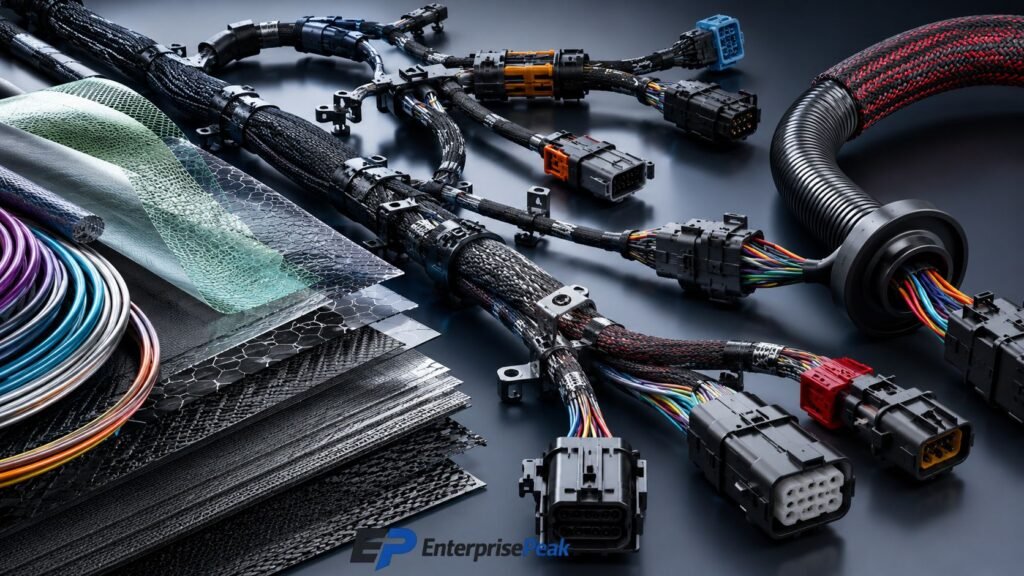
The outer jacket of a wiring harness serves as the first line of defense against physical damage and environmental hazards. As operating environments become more demanding, wiring harness manufacturers are turning to advanced jacketing materials that provide superior protection.
Thermoplastic Polyurethane (TPU)
TPU offers exceptional abrasion resistance, flexibility, and impact strength. It is increasingly used in industrial automation, robotics, and mobile equipment where harnesses experience continuous movement and wear.
Silicone-Based Jackets
Silicone remains one of the most effective materials for high-temperature applications.
Its ability to maintain flexibility across a wide temperature range makes it ideal for aerospace systems, engine compartments, and industrial equipment exposed to extreme heat.
Halogen-Free Flame-Retardant Materials
Safety regulations are encouraging the adoption of halogen-free flame-retardant compounds.
These materials reduce toxic smoke emissions during fires while maintaining strong mechanical and electrical performance, making them valuable for transportation, public infrastructure, and commercial buildings.
Self-Healing Protective Coatings
One of the most exciting developments involves self-healing polymers capable of automatically repairing minor scratches, cracks, and abrasions. These materials could significantly extend wiring harness lifespan by preventing small defects from developing into larger failures.
- Smart Materials
The future of wiring harness technology extends beyond passive materials. Engineers are increasingly integrating smart materials that actively monitor and respond to operating conditions.
Shape Memory Materials
Shape memory polymers and alloys can return to predefined shapes after deformation.
In wiring harness applications, these materials may improve installation efficiency, maintain cable organization, and reduce stress-related damage.
Embedded Sensing Materials
Advanced materials can incorporate sensing capabilities directly into harness components.
These sensors may monitor:
- Temperature
- Vibration
- Mechanical strain
- Humidity
- Electrical current
Real-time monitoring enables predictive maintenance strategies that identify potential failures before they occur.
Conductive Polymers
Conductive polymers offer unique opportunities to combine structural and electrical functions within a single material. As they mature, these materials may reduce component count while enabling new design approaches for intelligent wiring systems.
- Fiber Optics
As data demands continue to increase, fiber optic technologies are becoming more common within advanced wiring harness systems because they offer:
- Extremely high data transmission speeds
- Immunity to electromagnetic interference
- Reduced signal loss
- Enhanced communication reliability
These advantages make them particularly attractive for autonomous vehicles, aerospace platforms, and advanced industrial automation systems.
Conclusion
The future of wiring harness technology is being shaped by a new generation of materials designed to meet the evolving demands of modern electronics. From lightweight aluminum conductors and advanced fluoropolymer insulation to intelligent sensing materials and fiber optics, every component of the harness is undergoing significant innovation.
These emerging materials are not merely incremental improvements. They represent a fundamental shift toward wiring systems that are lighter, smarter, safer, and more reliable. As electric vehicles, connected devices, autonomous systems, and smart factories continue to expand, advanced wiring harness materials will play an increasingly important role in enabling the next generation of technological innovation.
Manufacturers that embrace these advancements today will be better positioned to deliver high-performance products capable of meeting the reliability, efficiency, and sustainability requirements of tomorrow’s connected world.