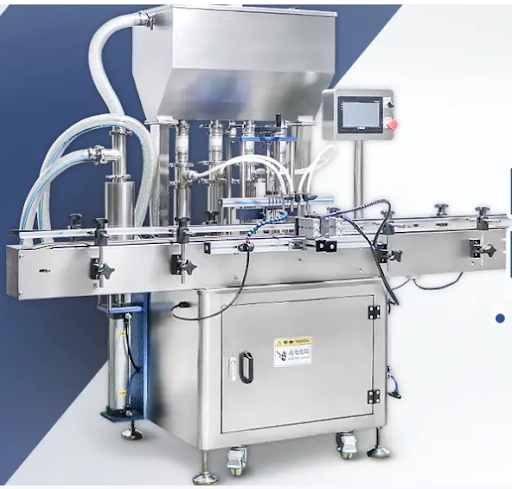

An automatic filling machine can help small businesses improve packaging efficiency, maintain consistent product quantities, and prepare products for growing customer demand. For manufacturers producing beverages, sauces, cleaning products, cosmetics, or other packaged goods, filling containers manually can become time-consuming as order volumes increase.
Choosing suitable filling equipment allows a business to organize its production process without immediately investing in a large industrial packaging line. The key is to select a machine that matches the product, available workspace, and expected production volume.
Why Small Businesses Need Filling Automation
Manual filling may work well when production volumes are low. However, as orders increase, maintaining consistent quantities across hundreds or thousands of containers can become difficult. Repetitive work may also increase the risk of spills, inaccurate measurements, and delays.
An automatic filling machine performs filling cycles according to configured settings. Depending on its design, it may also use sensors to detect containers and control the dispensing process.
This can help small manufacturers establish more repeatable packaging procedures and allocate employees to quality checks, product preparation, and order handling.
Selecting the Right Filling Technology
The type of machine should depend on the product being packaged. Liquid filling machines are commonly used for suitable beverages, oils, detergents, and other flowing products. Piston filling systems can be appropriate for thicker materials such as creams, pastes, and sauces.
Powder filling equipment is designed for products such as spices, flour, and other dry ingredients. Businesses handling granular materials may require a weighing-based or other specialized filling system.
Before purchasing equipment, manufacturers should consider product viscosity, particle size, container opening dimensions, and the quantity required per package. Testing the actual product can help confirm whether a proposed machine is suitable.
Balancing Cost and Production Capacity
Small businesses often need to control their initial investment. However, choosing equipment solely because it has a low purchase price can lead to higher maintenance expenses or production limitations later.
It is important to compare the machine’s practical output, adjustment requirements, cleaning time, and expected maintenance costs. Businesses should also check whether spare parts and technical support are readily available.
A machine with adjustable settings may be useful for companies that package several container sizes. Nevertheless, the equipment must be capable of handling each product safely and accurately.
Improving Product Quality
Consistent filling helps businesses deliver packages with a professional appearance. It can also support better control over material usage and reduce avoidable product waste.
Manufacturers should establish procedures for checking fill quantities throughout production. Depending on the product, these checks may involve measuring liquid volume or weighing filled containers.
Operators should inspect nozzles, seals, sensors, and other relevant components regularly. Blockages, worn parts, and incorrect settings can affect filling performance if left unaddressed.
Maintaining Hygiene and Safety
Businesses packaging food, beverages, cosmetics, or chemicals must select equipment appropriate for their products. Product-contact surfaces should be compatible with the formulation and the required cleaning process.
Cleaning schedules, routine inspections, and operator training help maintain suitable production conditions. Workers should also follow the machine manufacturer’s safety instructions during operation, cleaning, and maintenance.
For products that require specialized hygiene controls, businesses should verify that the equipment supports the applicable requirements before purchasing it.
Planning for Business Growth
When selecting an automatic filling machine, business owners should consider not only current production needs but also realistic future demand. A suitable machine may help increase output while maintaining a manageable workflow.
It is also worth evaluating whether the equipment can connect with a conveyor, capping machine, or labeling system as the business expands. Compatibility with future equipment can reduce the need for major changes later.
Conclusion
An automatic filling machine can help small businesses improve packaging consistency, reduce repetitive manual work, and prepare for higher production volumes. By considering product requirements, machine capacity, maintenance, hygiene, and total ownership costs, manufacturers can choose equipment that supports their operational goals and long-term growth.