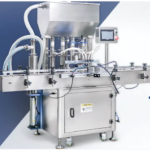
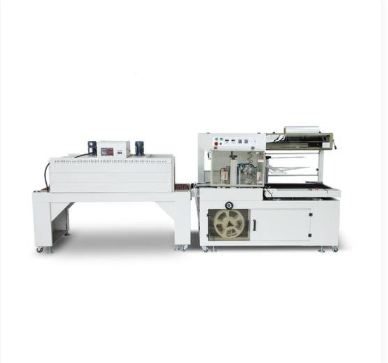

Selecting an automatic wrapping machine is an important decision for businesses that want to improve packaging operations. The right equipment can support consistent packaging, reduce repetitive work, and fit into an existing production line. However, not every machine is suitable for every product or facility.
Before comparing prices, buyers should understand the packaging task, production requirements, available space, and materials used in their operation.
Identify What Needs Wrapping
The first step is to identify the product and the type of packaging required. Individual food products, consumer goods, cartons, industrial components, and palletized loads may need very different wrapping systems.
A flow-wrapping machine may be suitable for individual products that can move through a continuous film packaging process. A shrink-wrapping system may be appropriate when a close-fitting film package is required. A pallet stretch wrapper is designed to secure compatible loads for handling and transportation.
Defining the application prevents businesses from purchasing equipment that cannot handle their products properly.
Calculate Required Production Capacity
Estimate how many products or pallets need to be wrapped per hour or per shift. Consider both average demand and periods of peak production.
The machine’s rated speed should be reviewed alongside loading, unloading, film replacement, product changeovers, and potential downtime. These activities influence the output that can be achieved in daily operation.
It is also useful to consider future demand. A business expecting moderate growth may benefit from equipment that can accommodate a higher workload without requiring an immediate replacement.
However, purchasing a much larger system than necessary can increase upfront costs and create unnecessary complexity.
Check Product Dimensions and Weight
Confirm the minimum and maximum dimensions of the products or loads. These measurements help determine whether the machine’s wrapping area, turntable, conveyor, or sealing system is suitable.
For pallet wrappers, consider pallet dimensions, load height, total weight, and stability. For individual-product wrappers, consider the product’s shape, orientation, surface characteristics, and ability to move through the machine.
If the facility handles several product sizes, check whether the equipment can be adjusted quickly. Some systems provide programmable settings, while others require manual changes or additional tooling.
Evaluate Packaging Materials
The machine must be compatible with the selected film or other wrapping material. Ask the supplier about supported roll widths, core dimensions, material thickness, and relevant performance characteristics.
Stretch film and shrink film serve different purposes and require different equipment. Businesses should not assume that a machine designed for one material can handle another.
For food-related packaging, confirm that the material is appropriate for the intended food-contact application and meets applicable regulations. Product sensitivity to heat should also be considered when evaluating shrink-wrapping equipment.
Consider Automation and Integration
Automatic wrapping machines range from relatively simple systems to advanced lines with conveyors, sensors, automatic film cutting, and integrated controls.
A suitable level of automation depends on production volume and labor availability. Businesses with steady, high-volume output may benefit from automatic infeed and outfeed systems. Smaller operations may find a less complex machine easier to install and maintain.
Check the available floor space, power supply, conveyor height, access routes, and maintenance clearance. Equipment should integrate smoothly with upstream and downstream operations without creating congestion.
Compare Safety and Service Support
Safety should be a central part of the purchasing decision. Ask about machine guarding, emergency stops, safety interlocks, operating instructions, and required operator training.
For shrink-wrapping equipment, review the heating system and associated protective features. For pallet wrappers, consider hazards associated with turntables, rotating arms, and moving loads.
Supplier support is equally important. Confirm warranty coverage, installation assistance, spare-parts availability, maintenance services, and response times for technical problems.
A supplier that understands the application may also help with machine setup and operator training.
Estimate Total Ownership Cost
The purchase price is only one part of the total cost. Businesses should account for installation, packaging materials, energy use, maintenance, spare parts, training, and potential downtime.
Film consumption can influence operating expenses over time, especially in high-volume pallet wrapping. A machine with appropriate controls may help optimize material use, provided that the wrapping pattern still meets the required load-stability criteria.
Compare quotations using the same specifications and production assumptions. This makes it easier to identify differences in equipment capability and supplier services.
Test Before Making a Decision
Whenever possible, request a demonstration using representative products and packaging materials. Observe the complete cycle and check package quality, ease of adjustment, noise, and operator access.
Ask the supplier to explain routine maintenance and show how common faults are handled. A practical demonstration can reveal issues that are difficult to identify from a brochure alone.
Document the agreed performance requirements before placing the order.
Conclusion
Choosing an automatic wrapping machine requires careful evaluation of product dimensions, output targets, packaging materials, automation needs, safety, and long-term costs. By comparing machines against real operating conditions and confirming supplier support, businesses can select equipment that fits their production process and provides lasting practical value.